
Why go
Around 1200 BCE, the Shu kingdom that had built Sanxingdui moved its centre to what is now a Chengdu suburb, bringing its gold masks, jade blades and sun worship along. Jinsha was that capital — discovered by accident in 2001 when builders digging a pipeline hit ivory — and the museum preserves the site itself rather than just its treasures.
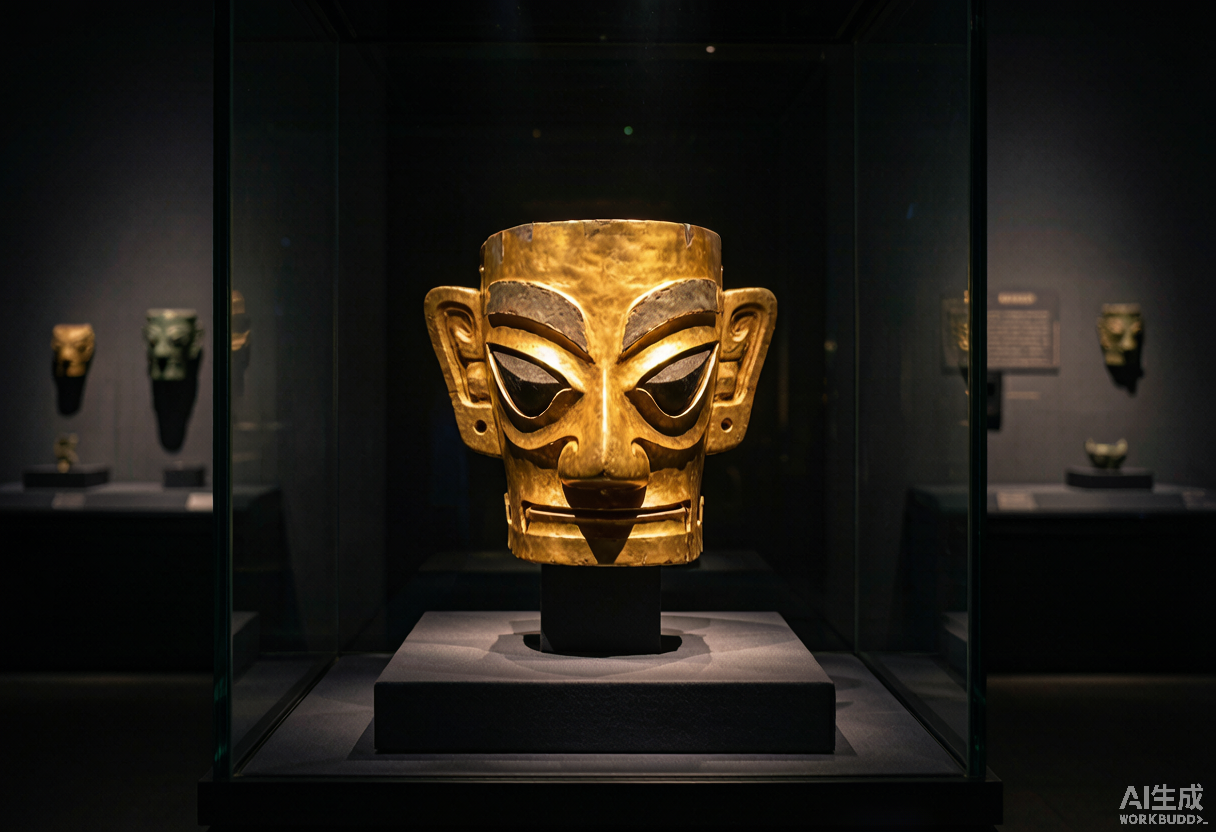
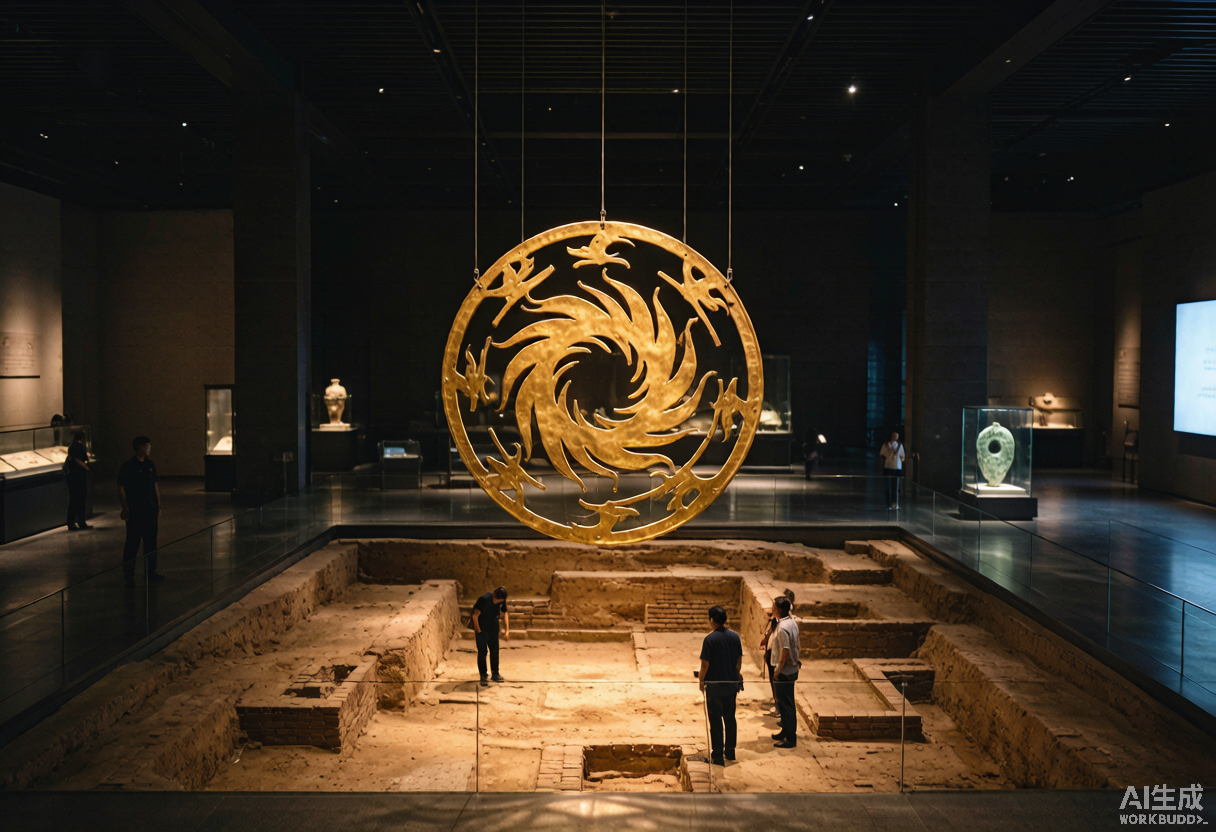
What makes Jinsha remarkable is the continuity story: the golden masks echo Sanxingdui's famous bronzes, and the sun bird's twelve rays and four circling birds read as calendar and cosmology. When China picked a national cultural heritage emblem in 2005, it chose this disc — a Chengdu goldsmith's work from three millennia back.
- The Golden Sun Bird (太阳神鸟): a 12-ray sun circled by four birds, cut from gold foil 3,000 years ago and just 0.02 cm thick
- The in-situ relic hall — a glass boardwalk directly over the excavation pit where elephants' tusks still lie in the earth
- Ivory, jade, and golden masks that connect Jinsha directly to Sanxingdui, its ancestor city
- 30 minutes from central Chengdu by metro; combine with the Wuhou or Du Fu sites for a culture day
What to see
Two buildings anchor the visit. The relic hall preserves the excavation under an earth-toned dome: walk the boardwalk over pits where ivory tusks, deer antlers and sacrificial objects still sit in the strata they were buried in. The exhibition hall displays the finds — the Golden Sun Bird in its own darkened chamber, jade ge blades so thin they were clearly ritual, a stone kneeling figure with bound hands that remains unexplained. The ivory display is one of the largest in any Chinese museum.
Sanxingdui and the pairing
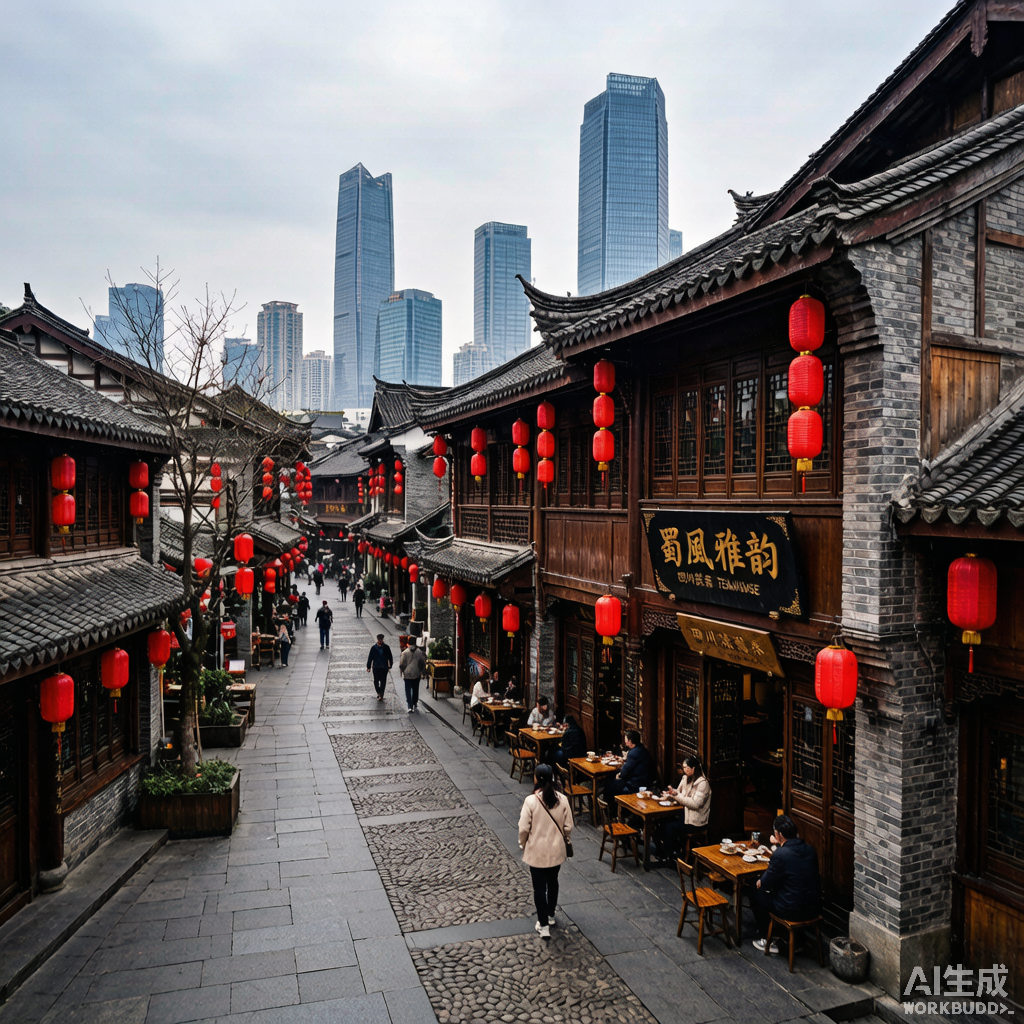
Sanxingdui, 40 km north, is the flashier sibling — giant bronze masks and the new hit museum. Jinsha is the quieter, more intimate half of the story, showing where the civilisation ended up. If you have one day in Chengdu and care about ancient Shu, do both: Sanxingdui in the morning, Jinsha in the afternoon, with a hotpot dinner in between. The People's Park teahouse makes a fitting Sichuanese pause.
Getting there
- Metro Line 7 to Jinsha Museum station, exit directly at the gate
- Discovered
- 2001, during construction work
- Dating
- c. 1200–650 BCE, Shu kingdom
- Claim to fame
- Golden Sun Bird = China's cultural heritage emblem