
Why go
In 1984 a Chinese palaeontologist, Hou Xianguang, found an exquisite fossil on Maotianshan hill — a soft-bodied animal preserved in extraordinary detail. He had stumbled on a Cambrian-age lagerstätte: a rare deposit preserving not just shells and bones but skin, eyes, guts and limbs.
Chengjiang dates to roughly 530 million years ago, early in the Cambrian explosion when animal life diversified rapidly. The site has yielded over 200 species, including early vertebrates, arthropods and the strange creatures like Anomalocaris and Hallucigenia that have no modern descendants.
- The Maotianshan fossil quarries — the original excavation site
- The Chengjiang Fossil Museum in Lvcun town
- Fossils of Haikouichthys — among the earliest known vertebrates
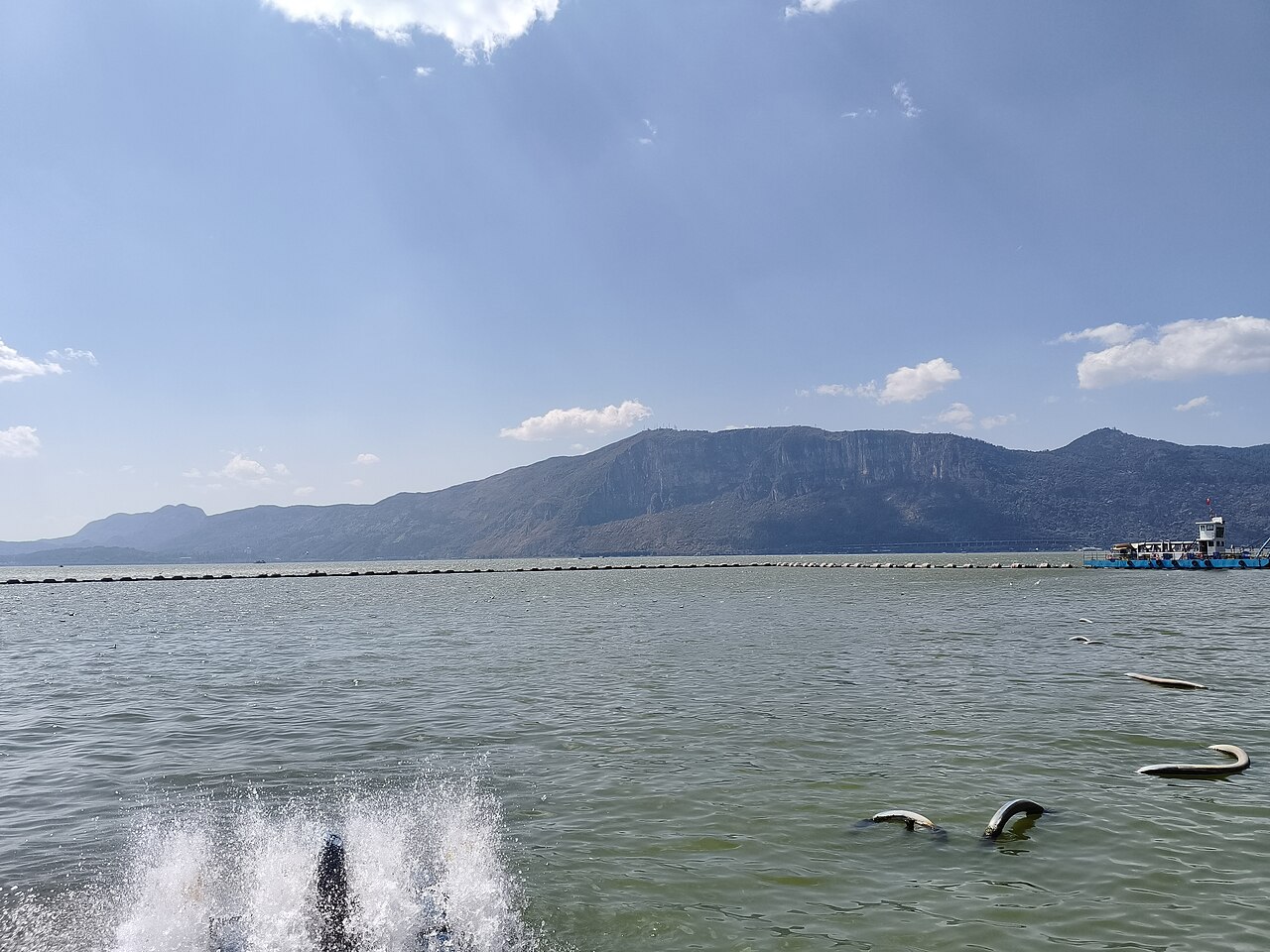
- Lake Fuxian — China's second-deepest freshwater lake
What to see
Start at the Chengjiang Fossil Museum in Lvcun — the best specimens are displayed here, including exquisitely preserved arthropods and the tiny fish-like Haikouichthys, considered one of the earliest animals with a backbone.
The Maotianshan quarries, a few kilometres away, can sometimes be visited with prior arrangement. The bedding planes of yellow shale split open to reveal fossils, many still being excavated by researchers.
Combine the fossil site with Lake Fuxian, whose deep blue water and quiet beaches make a pleasant afternoon after the museum.
Practical notes
Chengjiang is rarely on a tourist itinerary — which is exactly its charm. The museum is small but cutting-edge. Bring a notebook if you are interested; the labels are detailed. Ask at the museum about quarry access, which depends on the research season.
Getting there
- Bus from Kunming to Chengjiang (1.5 hours)
- Taxi from Kunming South Railway Station (1 hour)
- Discovered
- 1984 by Hou Xianguang
- Age
- c. 530 million years (early Cambrian)
- UNESCO
- World Heritage since 2012