
Why go
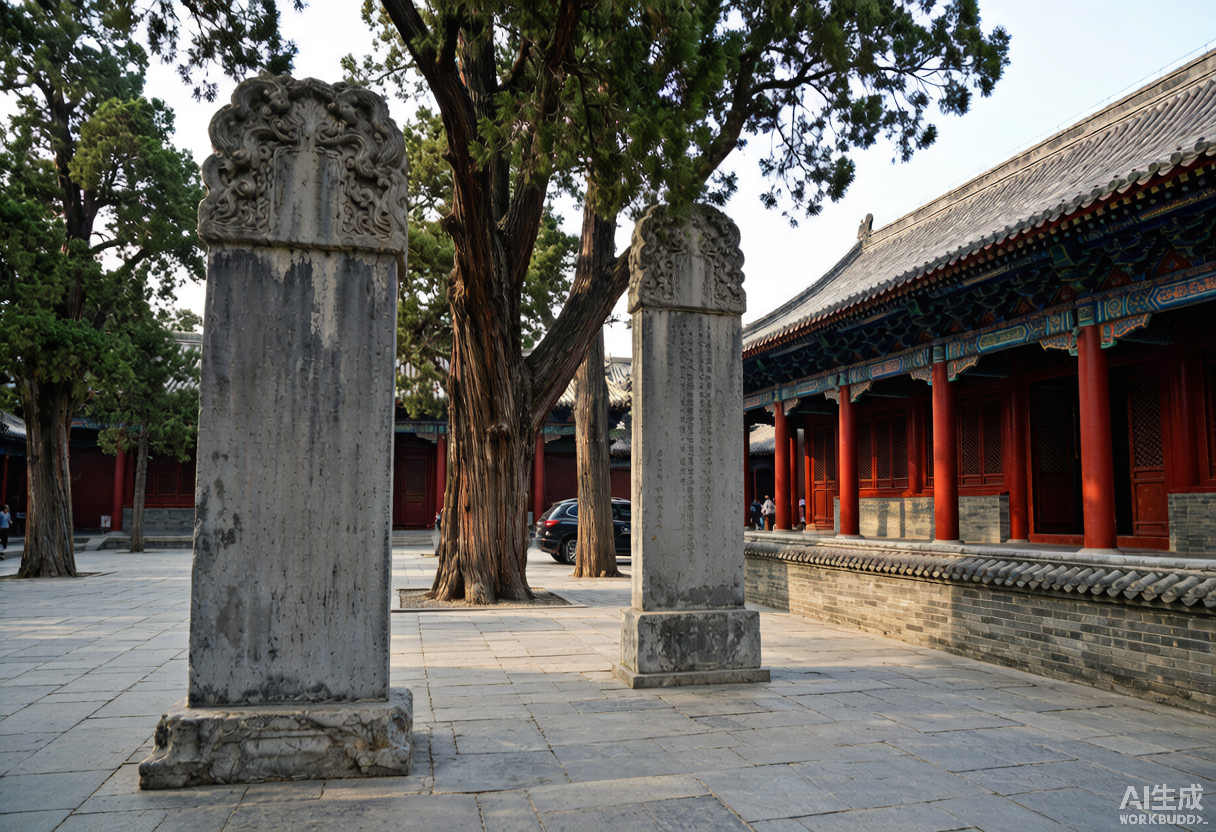
After Confucius died in 479 BCE, his modest home became a shrine; over the following centuries emperors who needed his philosophy to legitimise their rule kept expanding it, until the temple grew to palace scale with a wall modelled on the Forbidden City's. The axis runs north through nine courtyards of cypresses — some planted, legend says, by Confucius's own disciples.
East of the temple lies the Kong Family Mansion, where the direct male line of Confucius lived as hereditary 'Dukes for Perpetuating the Sage' until the 1930s — aristocrats whose only job was being descended from Confucius. North of town, the walled Cemetery of Confucius holds his grave and those of tens of thousands of descendants beneath a forest of ancient trees. UNESCO listed all three in 1994.
- The Temple of Confucius: nine courtyards along a 1.3 km axis, scaled like an imperial palace
- Apricot Platform (杏坛), the traditional site of Confucius's teaching, and the 10 stele pavilions of Tang-to-Qing emperors
- The Kong Family Mansion, home of his direct descendants for 77 generations
- The Cemetery of Confucius (孔林) — a walled forest of tombs, largest and longest-lasting family cemetery on earth
What to see
In the temple, walk the full axis: the Lingxing Gate, the ten stele pavilions recording imperial visits in stone carved with camels and dragons, the Apricot Platform, and finally Dacheng Hall — the great hall, its ten carved stone dragon columns the equal of anything in the Forbidden City. In the mansion, the labyrinth of halls shows how one family institutionalised ancestor worship. In the cemetery, take the buggy to Confucius's own simple mound, then walk back among the tombs.
Kong family cuisine
Qufu has its own banquet tradition — Kong Family Cuisine (孔府菜), an imperial-grade cuisine developed over centuries in the mansion kitchens, famous for dishes with literary names like 'poetry ritual ginkgo'. The full banquet is elaborate and expensive, but restaurants around the old town serve accessible versions. If you time it right, catch the daily re-enacted worship ceremony inside the temple grounds.
Getting there
- High-speed rail to Qufu East station, then 20 minutes by taxi or bus to the old town
- Qufu sits between Jinan and Xuzhou on the Beijing–Shanghai line
- Core sites
- Temple, Family Mansion, Cemetery — UNESCO 1994
- Scale
- Temple: 9 courtyards, 466 rooms; Cemetery: 2 km² of forest
- Lineage
- 77 generations of descendants in the mansion