
Why go
Emperor Qin Shi Huang unified China in 221 BCE and then built the world's most ambitious mausoleum: a buried city of bronze, jade and clay, surrounded by an army to serve him in death. The terracotta warriors are only the outer guard — the tomb itself remains unopened.
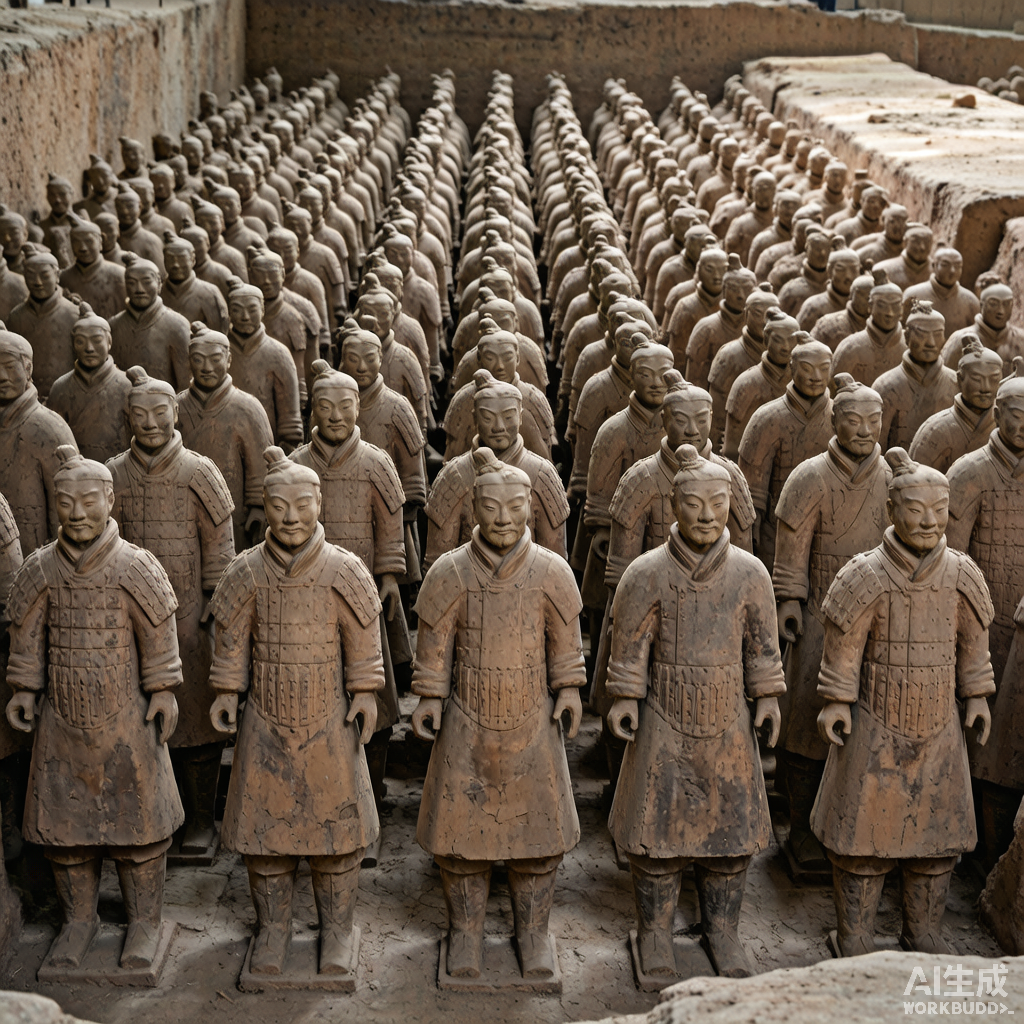
Standing in Pit 1 is genuinely moving. The figures were painted and armed; what you see today are their ghostly baked-clay bodies. The faces really are individual — no two are the same.
- Pit 1 — the main army of 6,000 figures, best seen from the far end
- Pit 3 — the small command post with its officers and chariot
- The bronze chariots in the exhibition hall (genuinely breathtaking)
- The excavation site itself — archaeologists are still working in front of you
Practical tips
Go in this order: Pit 1 (before the tour groups), then Pit 3, Pit 2, and the bronze chariot hall. A good guide or audio guide transforms the visit. Do not buy 'authentic' warriors from the souvenir market — the real ones are not for sale.
Nearby
Huaqing Pool, the hot-spring palace at the foot of Mount Li, is 10 minutes away and worth an hour. Xi'an city is 40km back — combine this with a half-day in the city centre.
What to See — Aug 2026 Picks
The summer talking point at the Terracotta Army is the 50th-anniversary exhibition 'The Buried Empire of the First Emperor', in which around a third of the 230 objects are shown publicly for the first time — including the mysterious green-faced kneeling archer and the purple-sleeved figurine. August also brings extended summer hours (entry from 8:00 until 21 August) and intense heat, so the early morning slot is everything: Xiaohongshu consensus is to be in Pit 1 by 8:30.
Pit 1 — The Grand Panorama
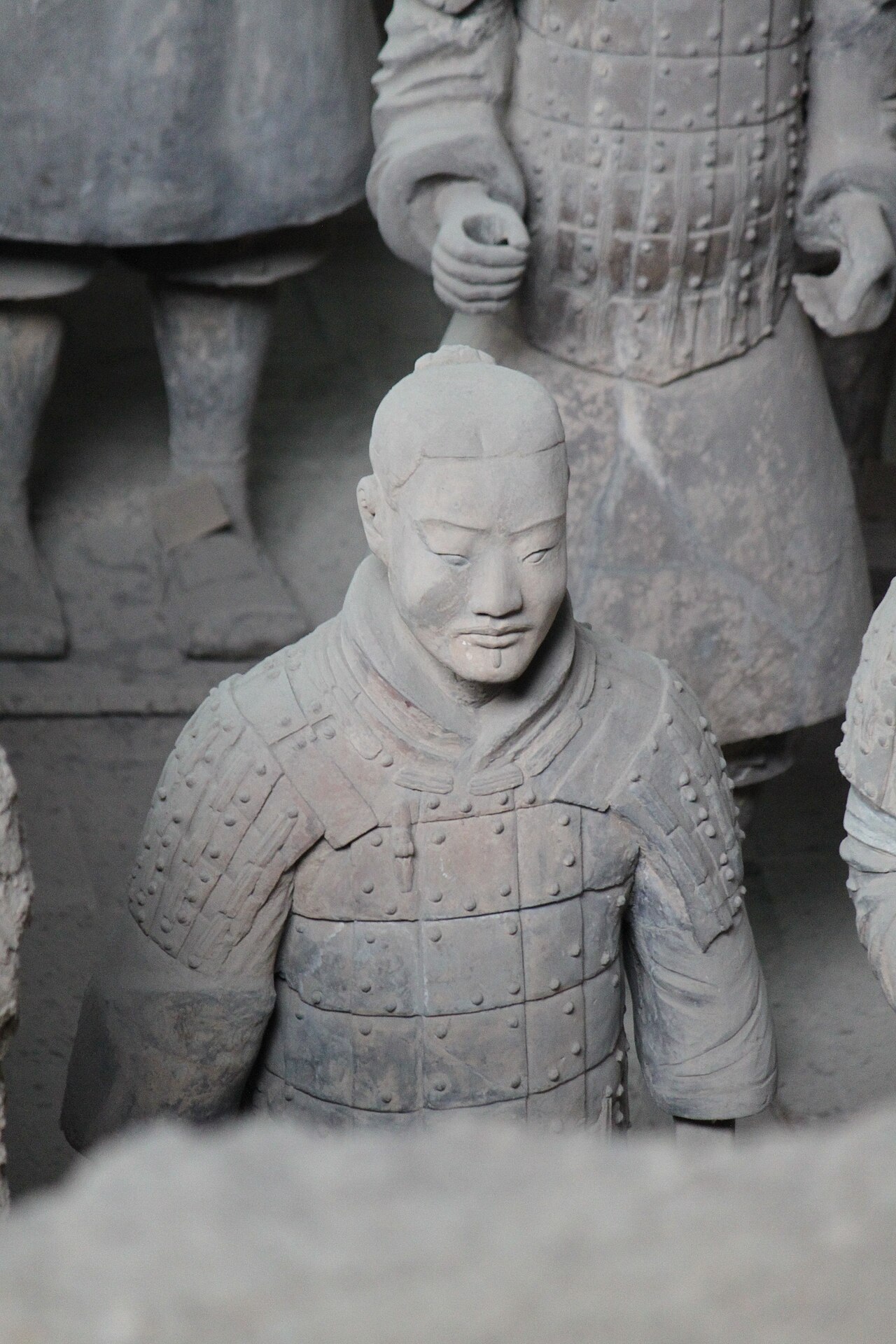
The 14,260-square-metre hall with roughly 6,000 life-size figures arranged in battle formation is the 'wow' moment of the site. Xiaohongshu's tip is to stand at the middle viewing platform for the full sweep of the formation, and glance left: archaeologists still work along the west end, so you can sometimes watch figures being restored in situ. Being first through the gates at 8:00 puts you at the rail before the tour groups flood in.
50th-Anniversary Special Exhibition (included in ticket)
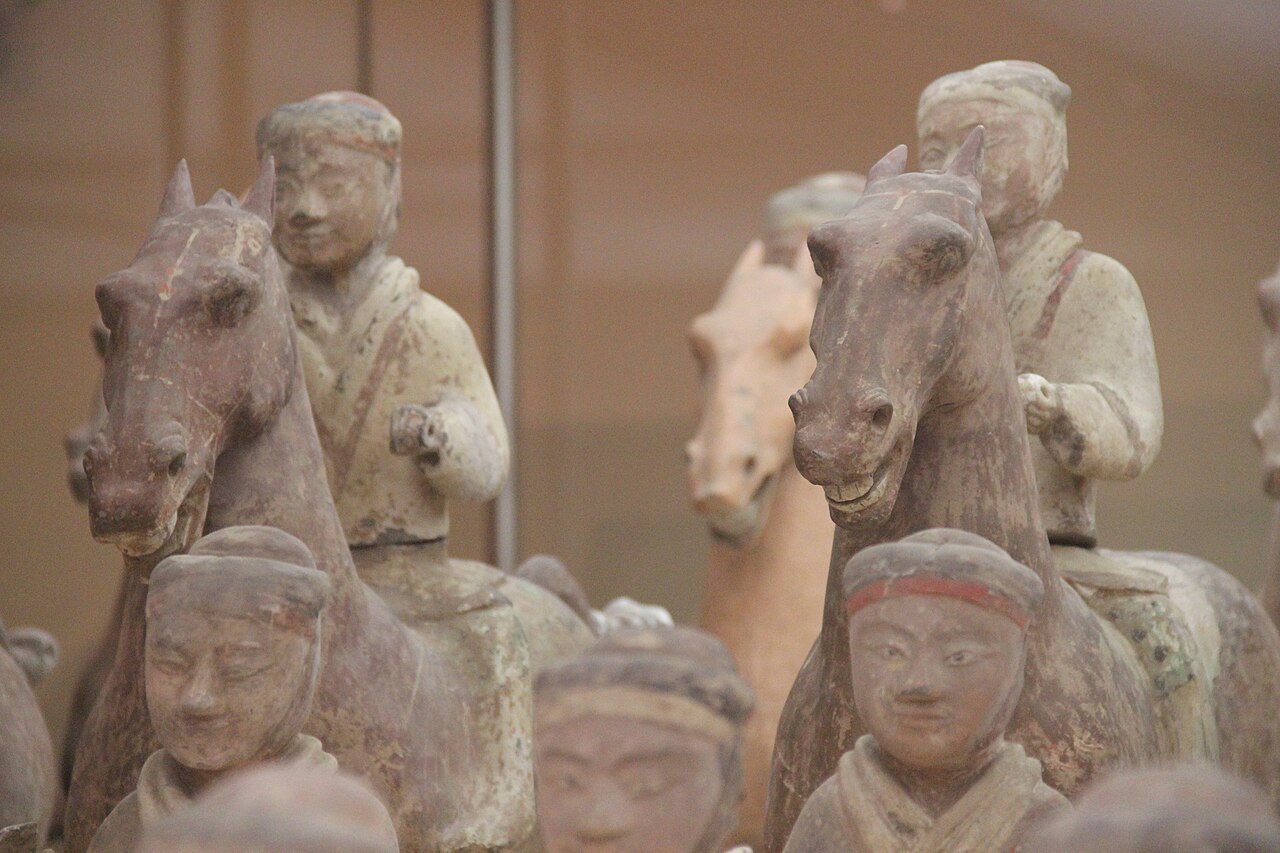
In the Artifacts Exhibition Hall, this is the retrospective of half a century of excavation around the First Emperor's mausoleum. Hunt out the green-faced kneeling archer — its face colour remains unexplained — the figurine wearing 'Chinese purple' synthetic pigment, and the 212-kilogram 'first cauldron of the Qin mausoleum', among 230 objects. It is the quietest, coolest hall on site and is included in the standard 120-yuan ticket, yet many first-timers still miss it.
Pit 2 — The Kneeling Archers
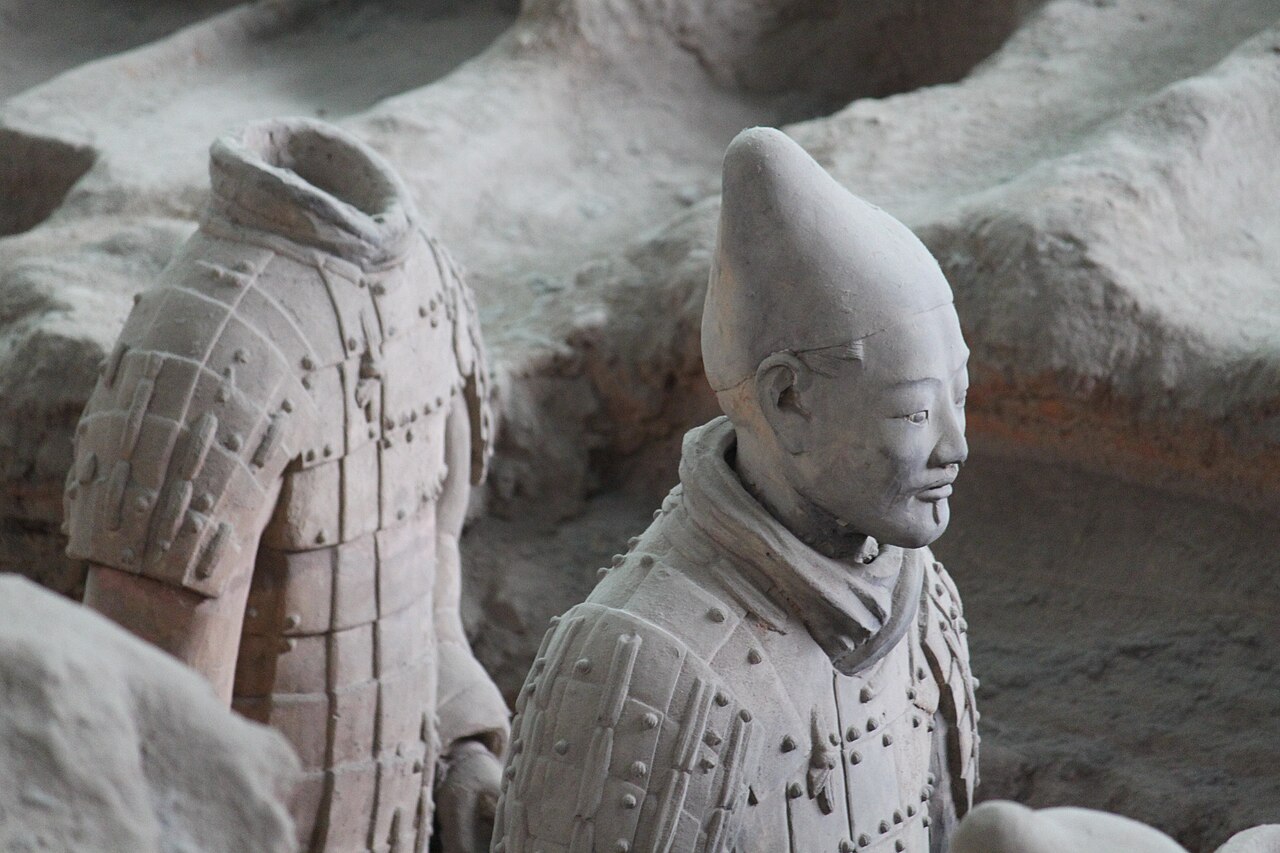
The mixed-arms pit where the iconic kneeling archer stands in its own case, close enough to see surviving traces of paint, individual hairstyles and armour detail — the clearest proof of the 'a thousand faces, a thousand men' claim. It is cooler and calmer than Pit 1, and travelers rate it the best place to study the craftsmanship.
Pit 3 — The Command Post
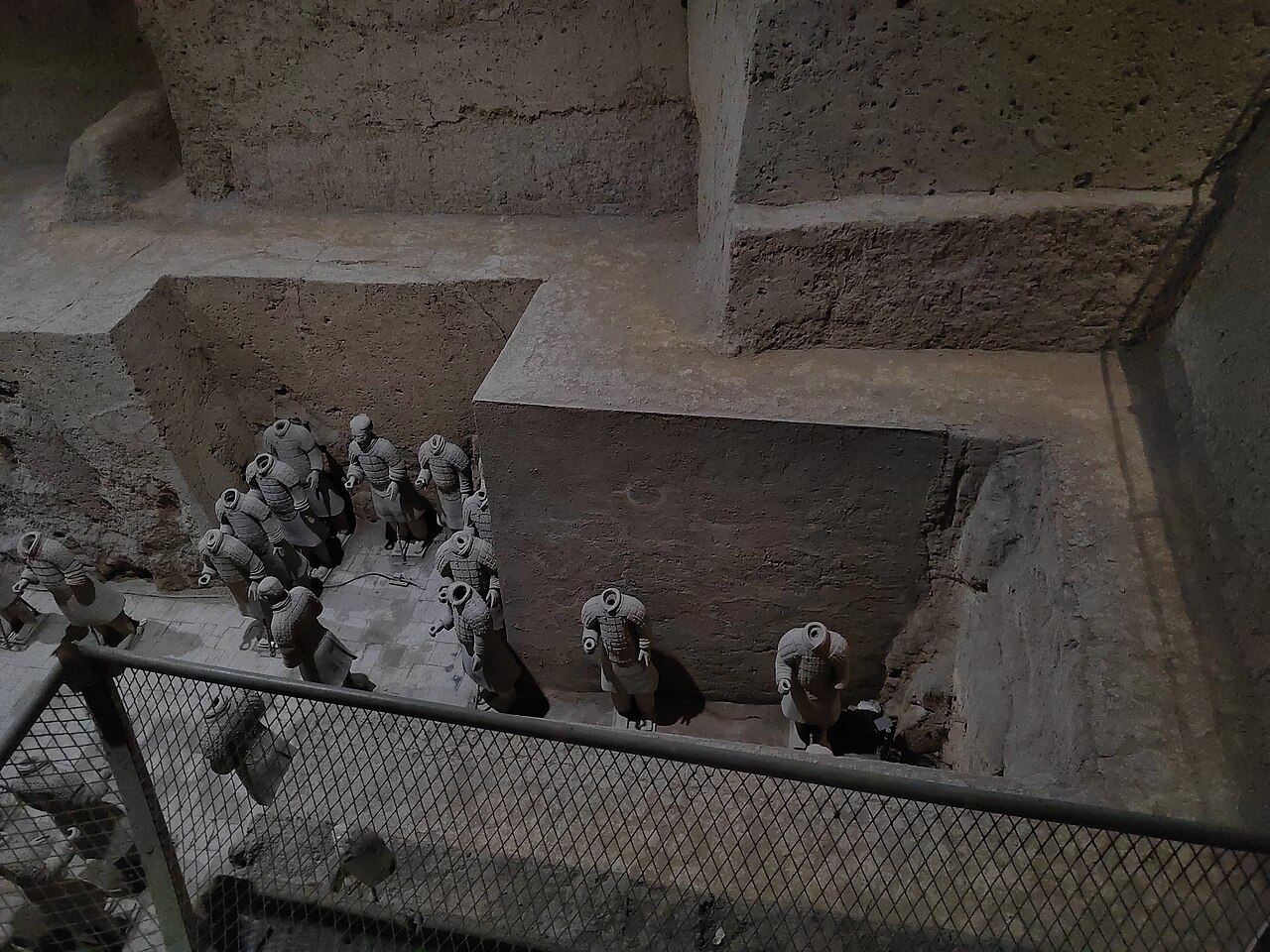
The smallest pit, laid out as the army's headquarters with figures standing face-to-face as if in conference. Photographers consistently call it the best pit for clean portraits — the crowd thins out here and the even light makes it easier to shoot without flash. A quick stop before or after Pit 1 completes the military story.
Bronze Chariots Museum in Lishan Garden
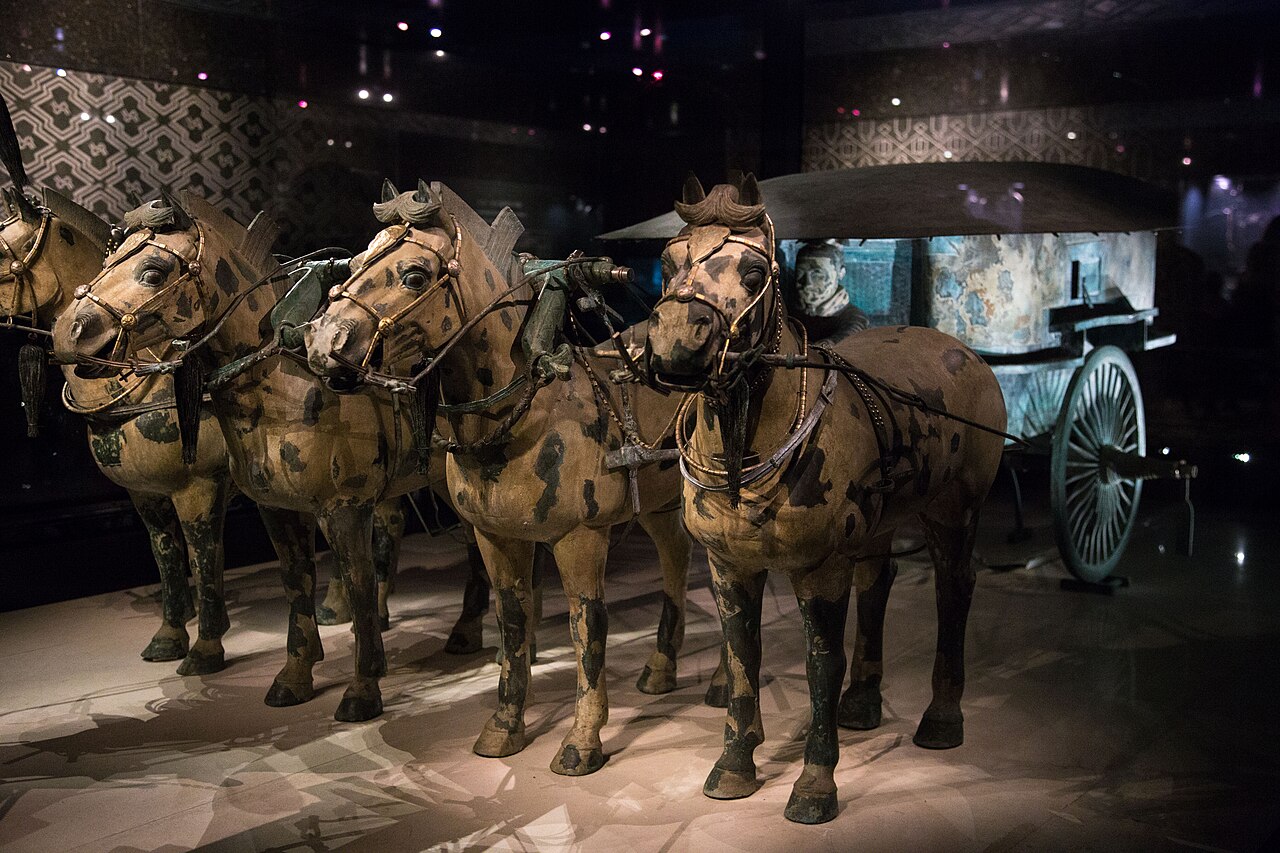
A free shuttle bus (about 20 minutes) crosses to Lishan Garden, the emperor's tomb zone, where the 'Crown of Bronze' — two half-scale bronze chariots built from more than 3,400 parts each, with gold and silver inlay — sits in its own museum. Many visitors skip it and regret it. The same ticket also covers the acrobat-figurine pit, the civil-official pit and the tomb mound itself.
Book 3–7 days ahead on the official mini-program (there is no walk-in ticket window), and through 21 August enter at the 8:00 summer opening — doors otherwise open at 8:30. See Pit 1 first, then the anniversary exhibition before the heat and tour groups peak; the 14:30–16:30 slot is the calm afternoon window. Never use flash — the light damages surviving paint.
Getting there
- Metro Line 9 to Huaqingchi, then a shuttle; or a direct bus from Xi'an city wall
- Discovered
- 1974 by farmers
- Figures
- 8,000+ soldiers, 130 chariots
- Owner
- Qin Shi Huang (d. 210 BCE)