

Why go
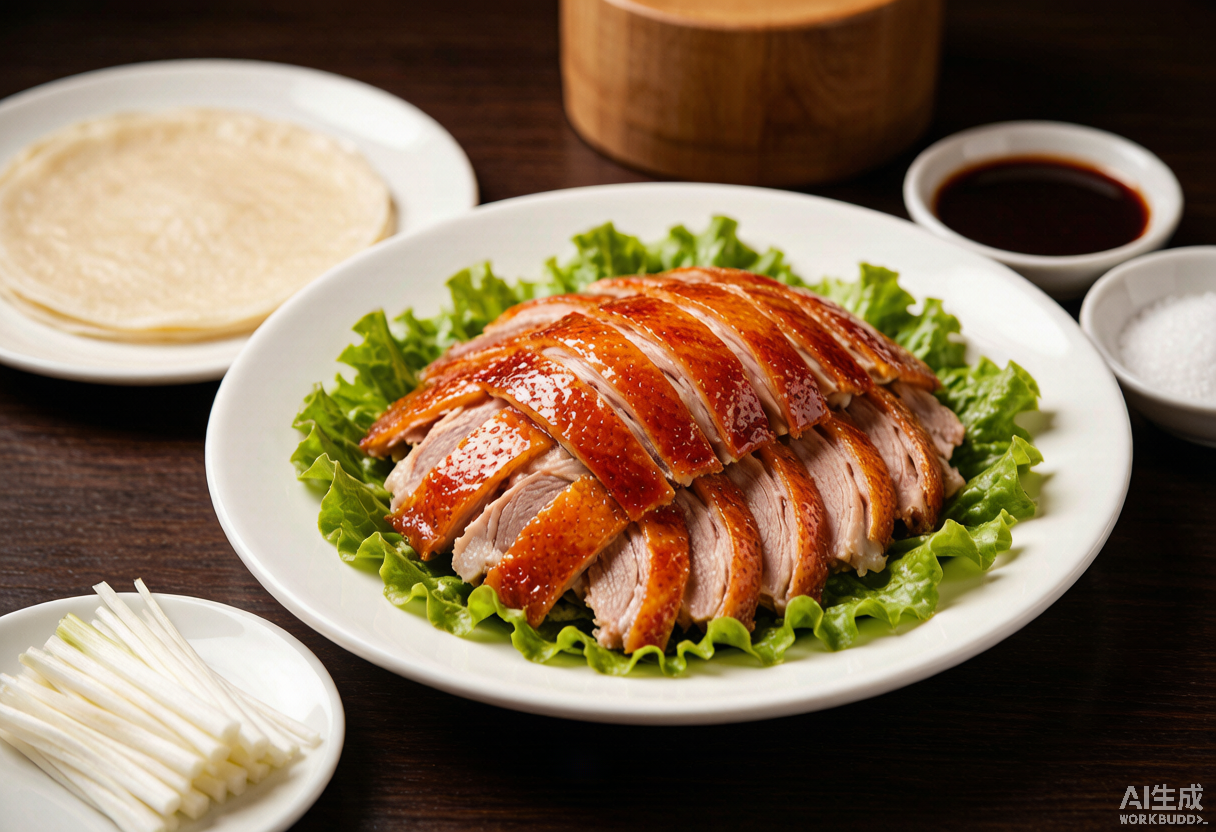
The best ducks are raised specifically for the dish and roasted in hung ovens over fruit wood. The skin should shatter; the meat should stay juicy. It is the most famous dish in China for a reason.
Everything is aligned on a ceremony: the bird is shown whole before carving, the chef slices it tableside, and each piece arrives on a warm plate with thin pancakes, spring onions, cucumber and sweet hoisin sauce.
- Eat it the traditional way: skin first with sugar, then pancakes with hoisin, scallion and cucumber
- Order the duck roasted over fruit wood for that smoky aroma
- Lunch service is quieter and cheaper than dinner
- A whole duck feeds two to three people — plus a soup made from the carcass
How to eat it
A proper spread arrives with thin pancakes, spring onions, cucumber and sweet hoisin sauce. Take a pancake, add two or three slices of duck with skin, dip, roll, and eat immediately. Don't overstuff — the balance is the point. Afterwards, ask for the carcass to be made into a soup; it is free at most old-school houses.
Where to try it
Two styles dominate. The old-school houses (think Siji Minfu) are reliable and family-run, while the luxury names (Da Dong, Made in China) add crispier modern skin and longer tasting menus. For a first visit, pick a house that still carves tableside and shows you the bird before slicing. In the old Qianmen area you can even watch the hanging ducks go into the ovens.
Getting there
- Most famous roast-duck houses sit within the 2nd Ring Road, near the Forbidden City
- Origin
- Imperial Beijing (Ming dynasty)
- Style
- Hung-roasted over fruit wood
- Serving
- Usually whole, carved tableside