
Why go
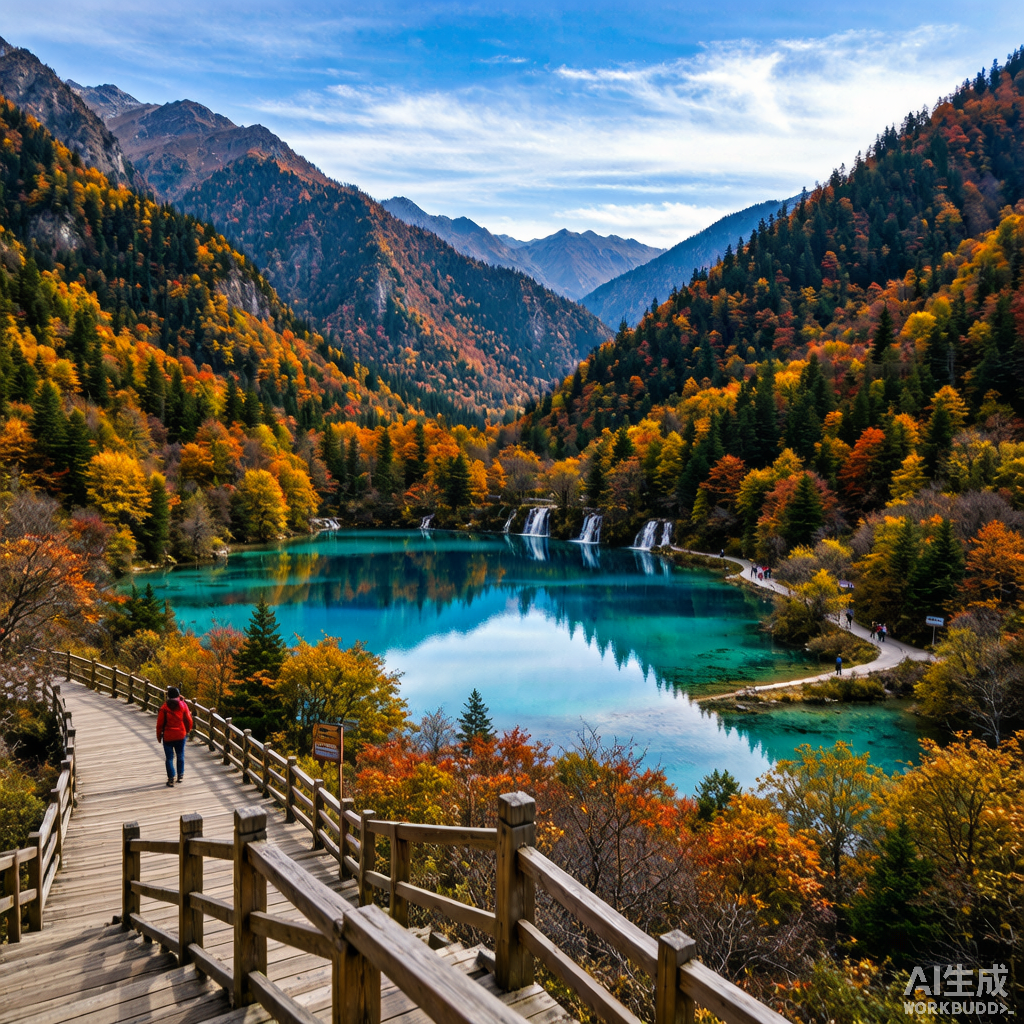
The valley's name means 'Nine Villages Valley' — nine Tibetan settlements that shared this forest. The geology does the rest: calcium deposits in the water scatter light, turning clear streams into bands of turquoise and sapphire.
The park is a Y shape: the Rize and Zechawa valleys meet at Nuorilang and continue as the Shuzheng valley to the entrance. Park buses shuttle between the scenic stops; walking between the lakes is the slower, lovelier way.
- Five Flower Lake — the clearest, most surreal water you'll ever see
- Nuorilang Waterfall, the widest high-altitude waterfall in China
- The Rize and Zechawa valleys for the classic lake circuit
- Autumn (Oct) when the leaves turn gold — book everything months ahead
Practical tips
The bus drops you at the far end of Rize valley first; work your way back. Walk the boardwalks between the lakes rather than bus-hopping. Altitude reaches 3,100m — go easy on the first day. Weather changes fast; layers are non-negotiable.
Nearby
Huanglong, 100km north, is the other great travertine site — golden terraced pools at 3,500m. Pair it with Jiuzhaigou for a 3–4 day trip.
Getting there
- Direct flights to Jiuzhai Huanglong Airport, or a 7–8h drive from Chengdu (recently road-open)
- Status
- UNESCO World Heritage (1992)
- Lakes
- 114 alpine lakes
- Altitude
- 2,000–3,100 m