
Why go
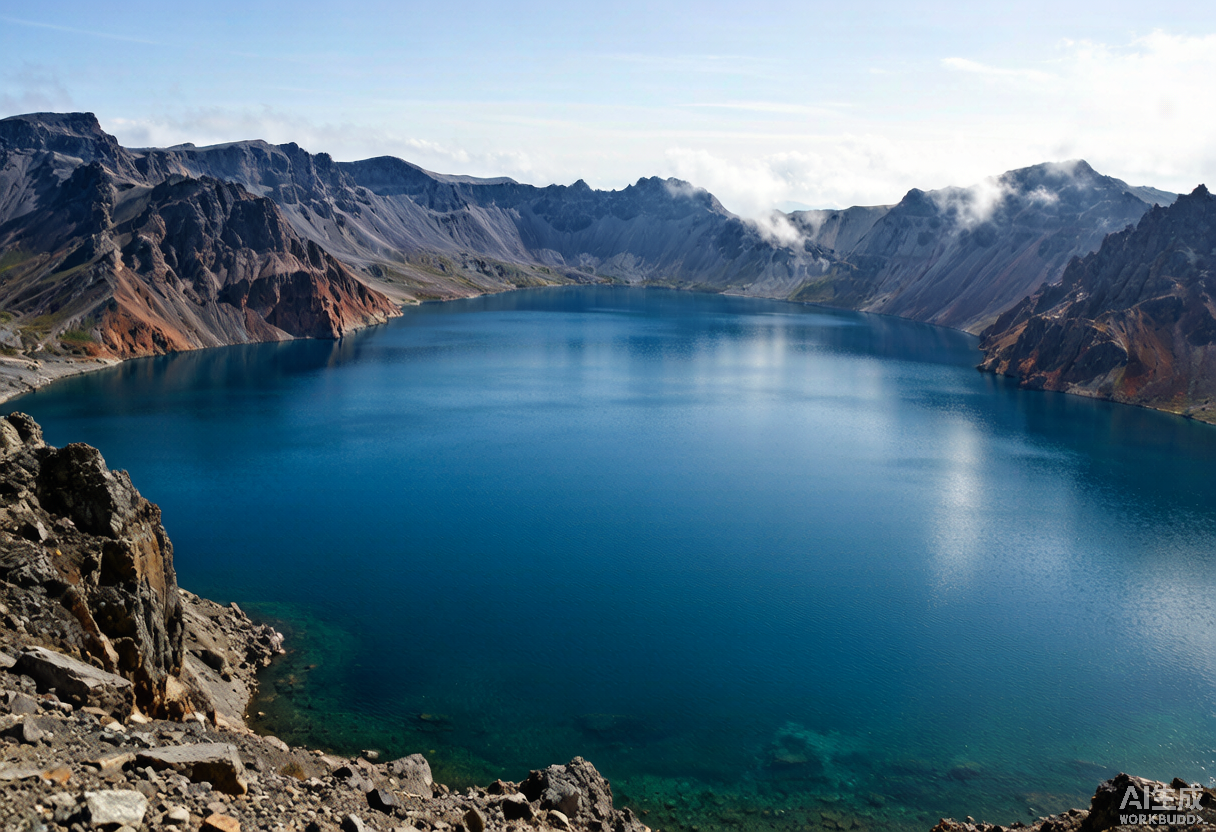
Few places let you walk the landscape of an eruption that happened within living memory. The 1719–21 eruption at Laohei Mountain is one of the few on record in Chinese history, and its aftermath is preserved as though the lava cooled yesterday: black ropes and blocks of basalt, cinder cones, and a lake chain impounded behind the flow.
The springs are the other half of the story. Wudalianchi's cold mineral springs — bubbling at 2–5°C with heavy iron and carbon dioxide — have been a health resort since the late 19th century, and 'sanatorium culture' still thrives in the lakeside town.
- Climb Laohei Mountain (Black Dragon) and stare into a real 300-year-old crater
- Walk the boardwalk across the frozen-looking lava fields — 'the stone sea'
- Drink from the cold mineral springs at Nanquan, near-freezing and iron-rich
- Boat across the five connected lakes, the oldest of them ringed by bare lava
The hikes
Laohei Mountain is a manageable stair climb to its 355-metre summit crater; the view over the five lakes is the geopark's signature. Wohu Mountain (Crouching Tiger) is a gentler cone. Between them, kilometres of boardwalk cross the lava field — wear good shoes, there is no shade.
Practical tips
The mineral water tastes strongly of iron and many find it an acquired taste — try a sip from a cup at the springs rather than buying bottles. Summer is green and busy; September brings golden birch colour and thinner crowds.
Getting there
- Train or bus to Wudalianchi town (Dedushi), then a local shuttle to the geopark
- Fly to Heihe or Qiqihar and continue by bus (~2–3h)
- Eruption
- 1719–21, Laohei Mountain
- Status
- UNESCO Global Geopark
- Springs
- Cold mineral springs at 2–5°C