
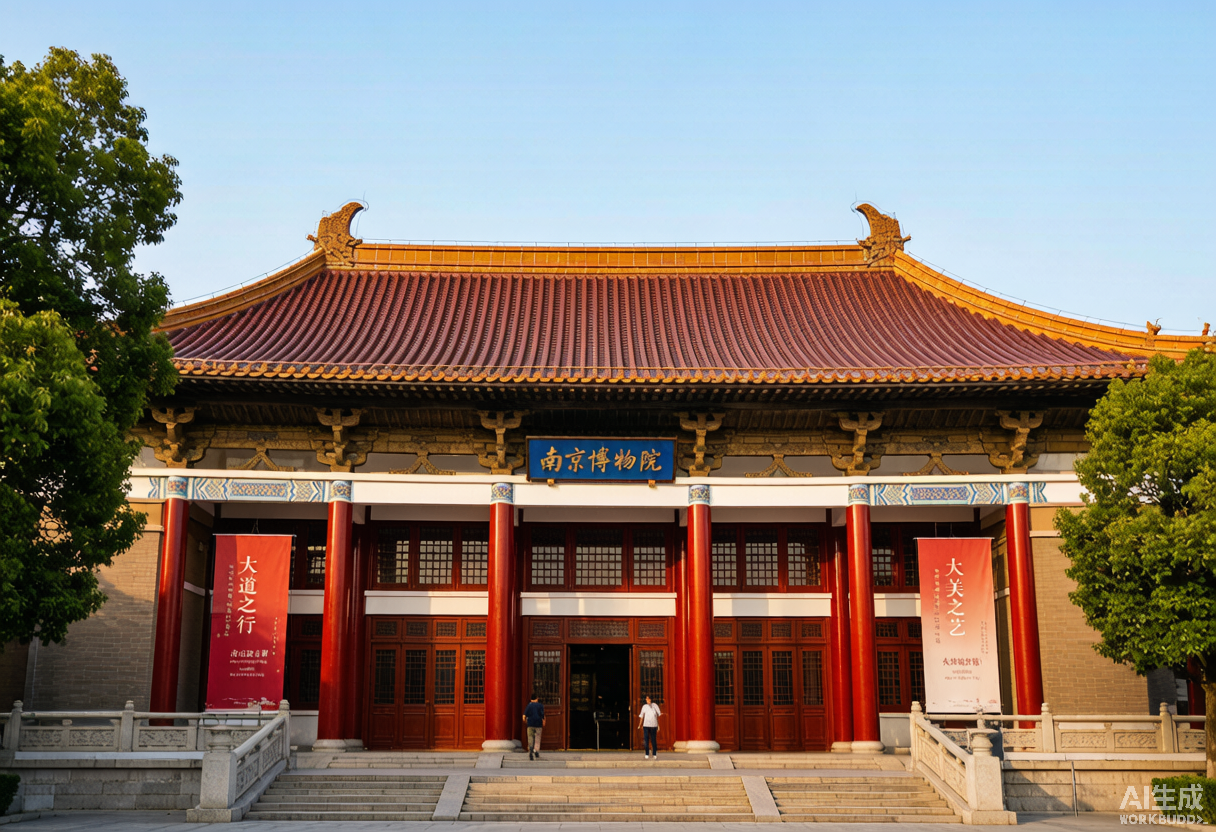
Why go
Nanjing served as capital across many of China's most consequential dynasties, and the museum's collections trace that history with unusual depth — especially the Six Dynasties era (3rd–6th century), when the city was a cultural beacon of the south.
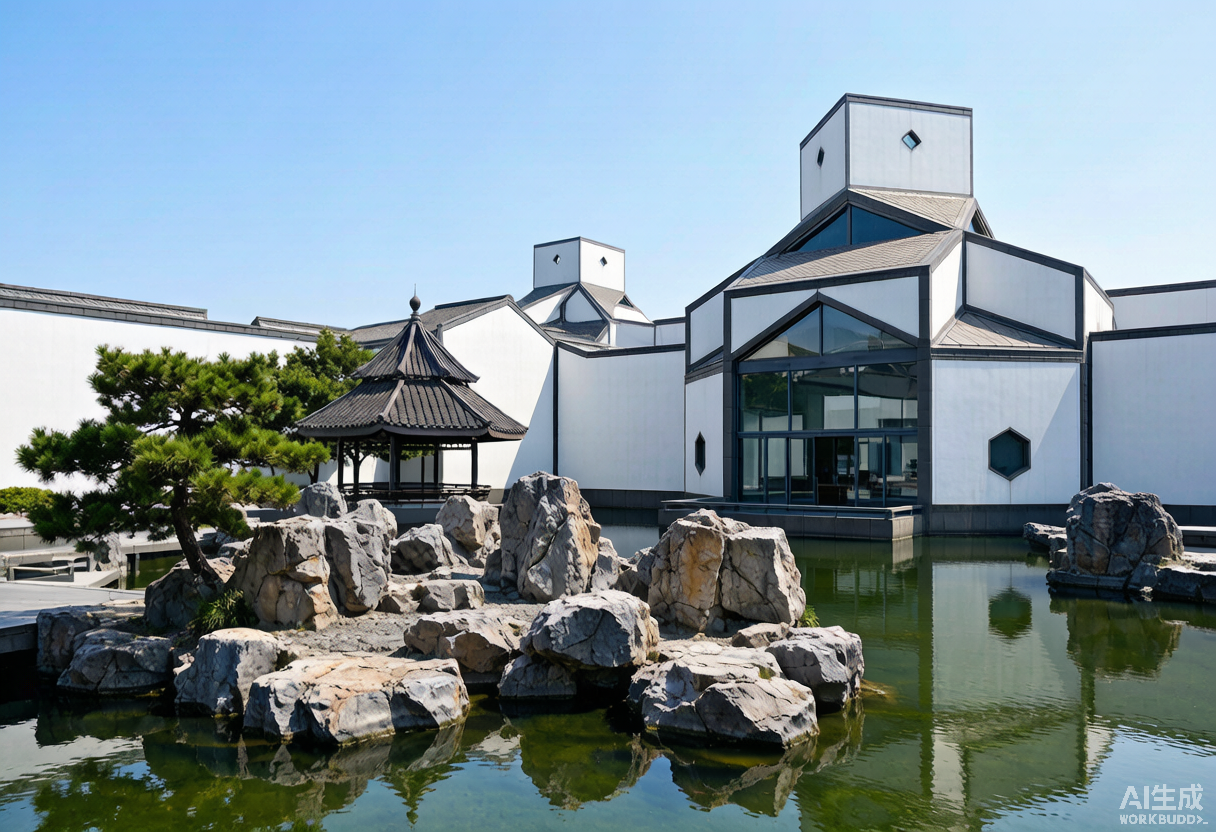
The building is part of the appeal: a handsome 1930s design with the bones of a traditional courtyard complex, recently expanded with modern wings that frame the old architecture beautifully.
- The Six Dynasties ceramics and Ming imperial porcelains are superb
- A 'History of Jiangsu' hall that reads like a full dynastic survey
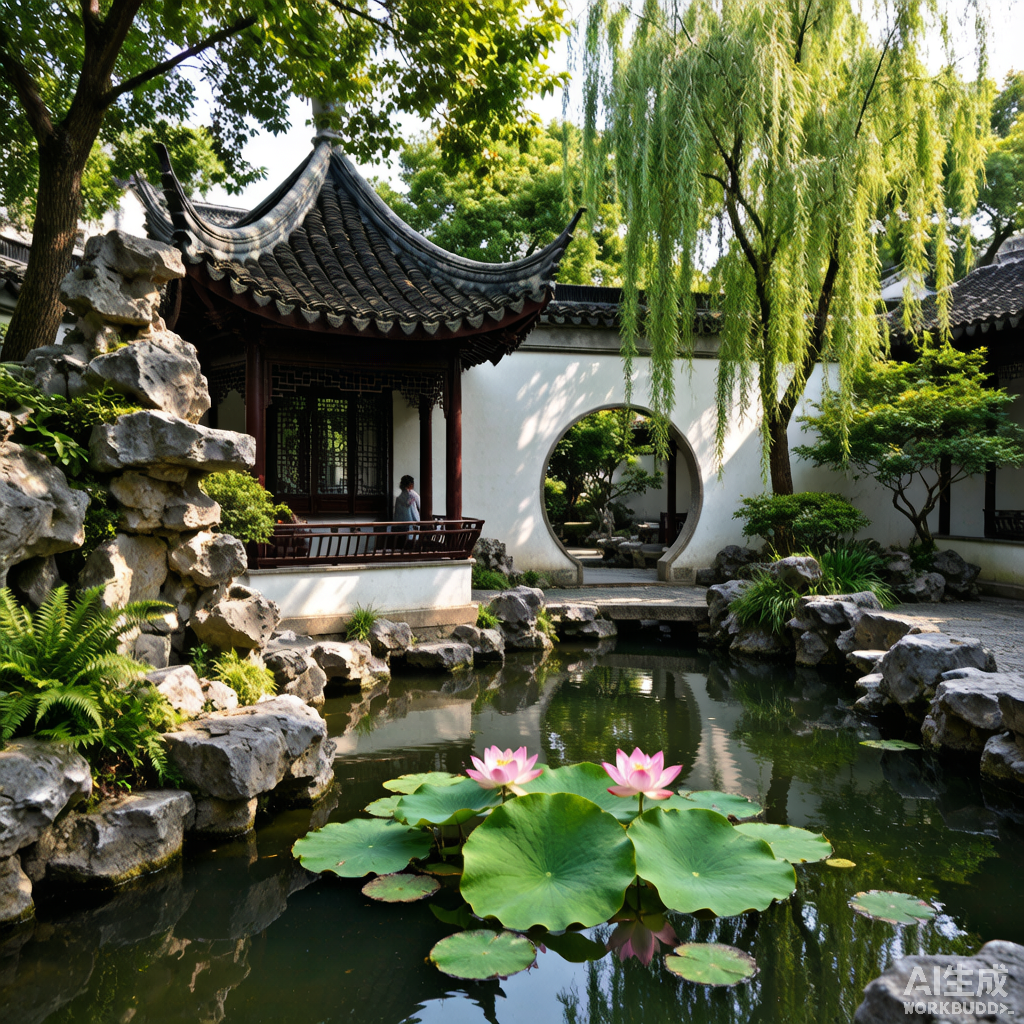
- Charming Republic-era architecture and courtyard gardens
- Free entry, generous hours, a calm and manageable visit
How to navigate
The 'History of Jiangsu' hall is the spine — it walks from ancient times to the Republic and gives excellent context in well-designed galleries. The ceramics and jade halls are the showstoppers, with a superb run of Ming blue-and-white and scholar's objects. Leave time for the Republic-era building and its courtyard — one of the loveliest museum spaces in China.
Combine with the city
Nanjing rewards two to three days: the Sun Yat-sen Mausoleum and Ming Xiaoling tomb are nearby, the Confucius Temple area handles evening riverside food, and the Nanjing Massacre Memorial is a sobering, essential stop. The museum fits naturally into a morning before a Ming city wall walk.
Getting there
- Metro Line 2 to Minggugong; the museum is near the Zhongshan Gate of the old city wall
- Founded
- 1933 — among China's first
- Collection
- 400,000+ objects
- Strength
- Six Dynasties and Ming porcelain