
Why go
Jiuhua's setting is what sets it apart: temples are pinned to cliffs and threaded along a ridge road, with the pilgrim village of Jiuhua Street in the middle of it all. The mountain has been a Buddhist centre since the Tang dynasty, when Korean prince-monk Kim Gyo-gak lived out his life here and was believed to be an incarnation of Dizang.
Because the mountain serves a real pilgrim function — families come here for blessings for the deceased — it feels less like a tourist park than many scenic mountains. The main sights can be done in a day, but an overnight stay in Jiuhua Street lets you hike the quieter temple trails before the day-trippers arrive.
- The 99-metre standing Dizang bodhisattva statue at Dayuan Cultural Garden
- Huacheng Temple square in Jiuhua Street — the atmospheric mountain village where most temples cluster
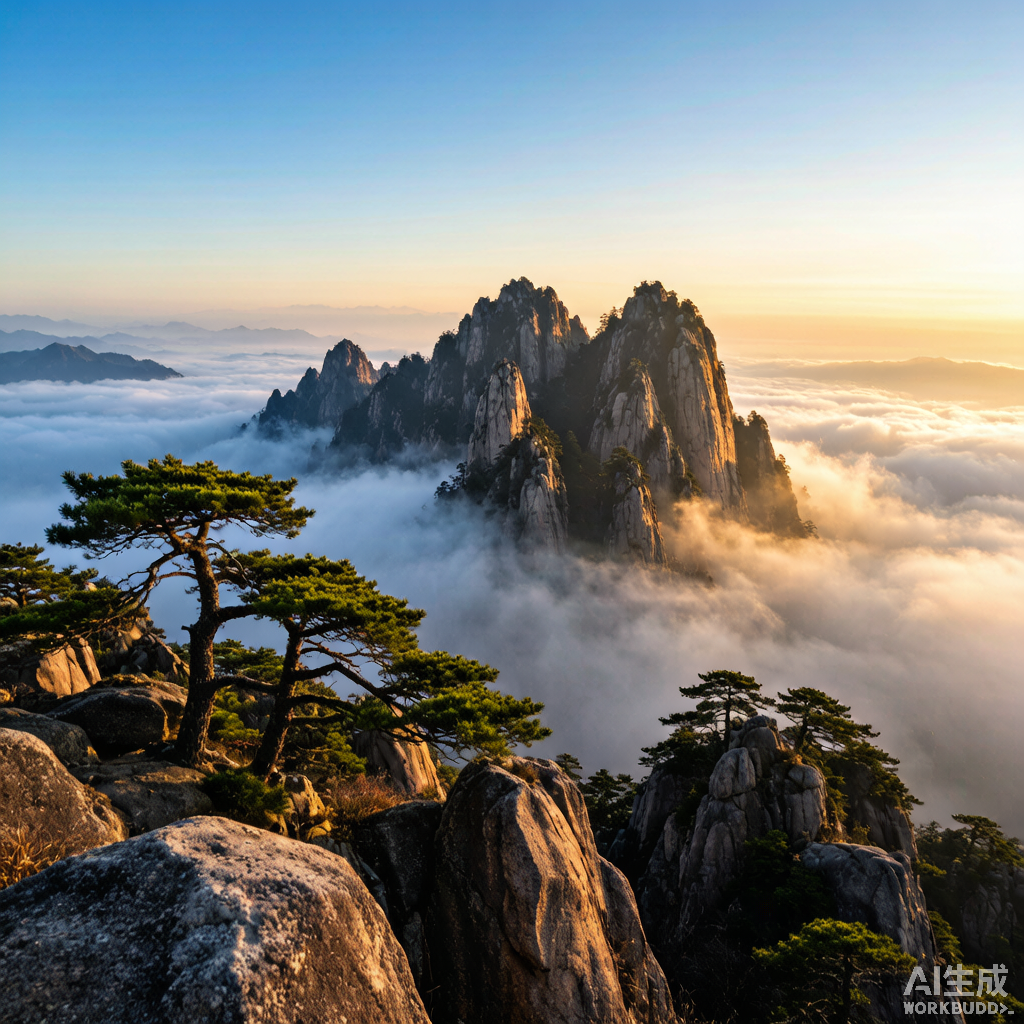
- Cable car to Baidu Peak for the classic view of peaks poking through mist
- The hundred-year-old 'flesh body' halls, where mummified monks are gilded and venerated
Practical tips
The bus from the visitor centre drops you at Jiuhua Street, from where everything is walkable via stone steps. Comfortable shoes are essential — there are a lot of stairs. Incense sellers are everywhere; temple-registered bundles are cheaper and allowed inside.
Nearby
Jiuhua is often combined with Huangshan (Yellow Mountain) and the Hongcun–Xidi villages on a southern Anhui loop. Chizhou sits on the Yangtze with good rail links to Shanghai and Wuhan.
What to See — Aug 2026 Picks
Xiaohongshu posts from August 2026 highlight Mount Jiuhua as a summer pilgrimage haven where mountain-top temperatures stay around 22 degrees Celsius while the base hits 33. Travelers warn of long cable car queues at Tiantai and afternoon thunderstorms, but rave about the 99-meter Ksitigarbha statue at the free Dayuan Cultural Park and the stunning cliffside walks at Huatai.
Dayuan Cultural Park — 99m Ksitigarbha Statue
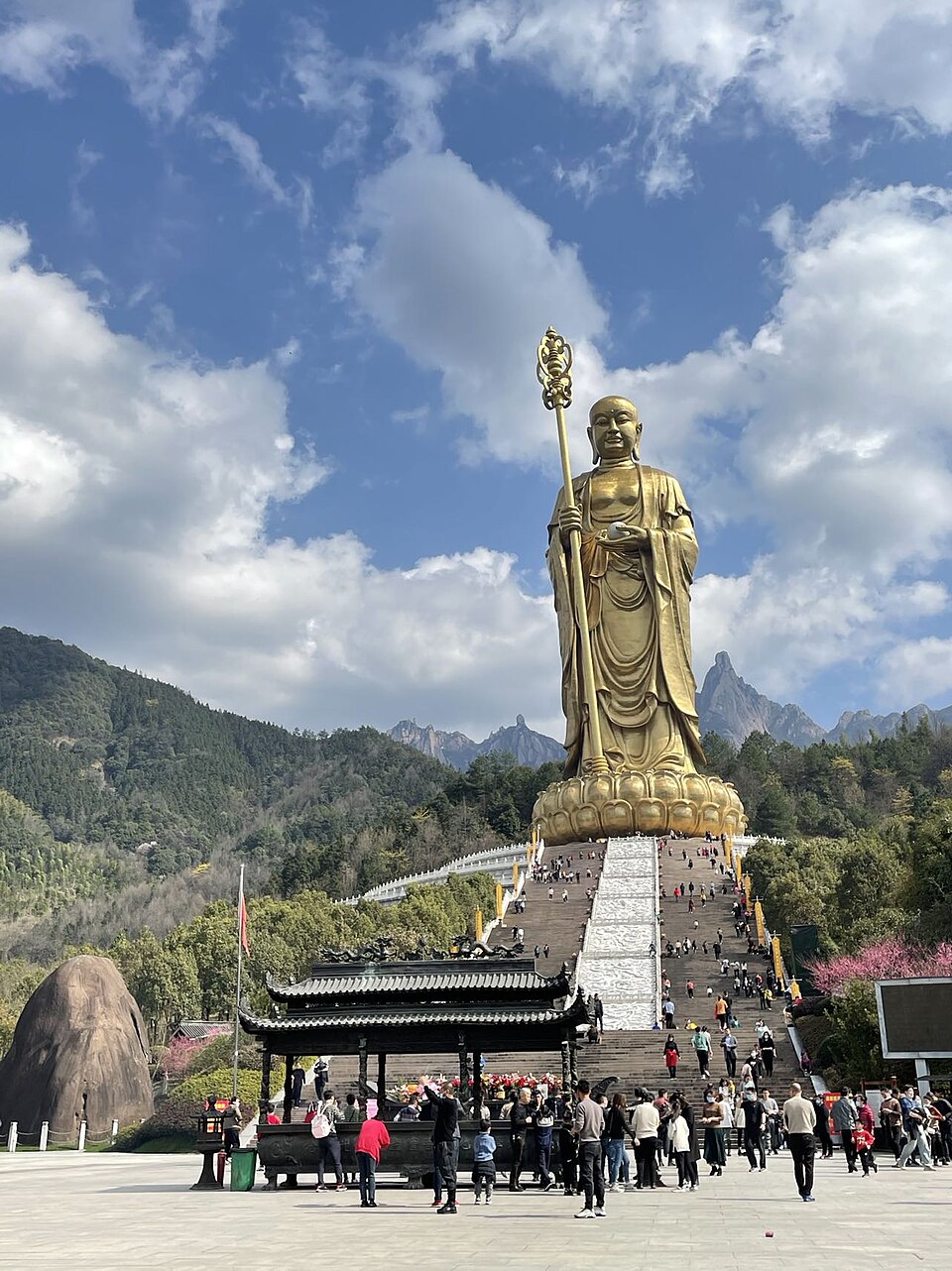
This free-to-enter cultural park at the mountain base features a colossal 99-meter-tall open-air bronze statue of Ksitigarbha Bodhisattva, the tallest of its kind in the world. Walk up the ceremonial steps and circumambulate the statue clockwise as pilgrims do, then frame it head-on at sunset when golden light floods the bronze face. The park also has a “Fly Over Jiuhua” 360-degree cinema ride for an aerial perspective on the whole range.
Roushen Hall — 99 Sacred Steps
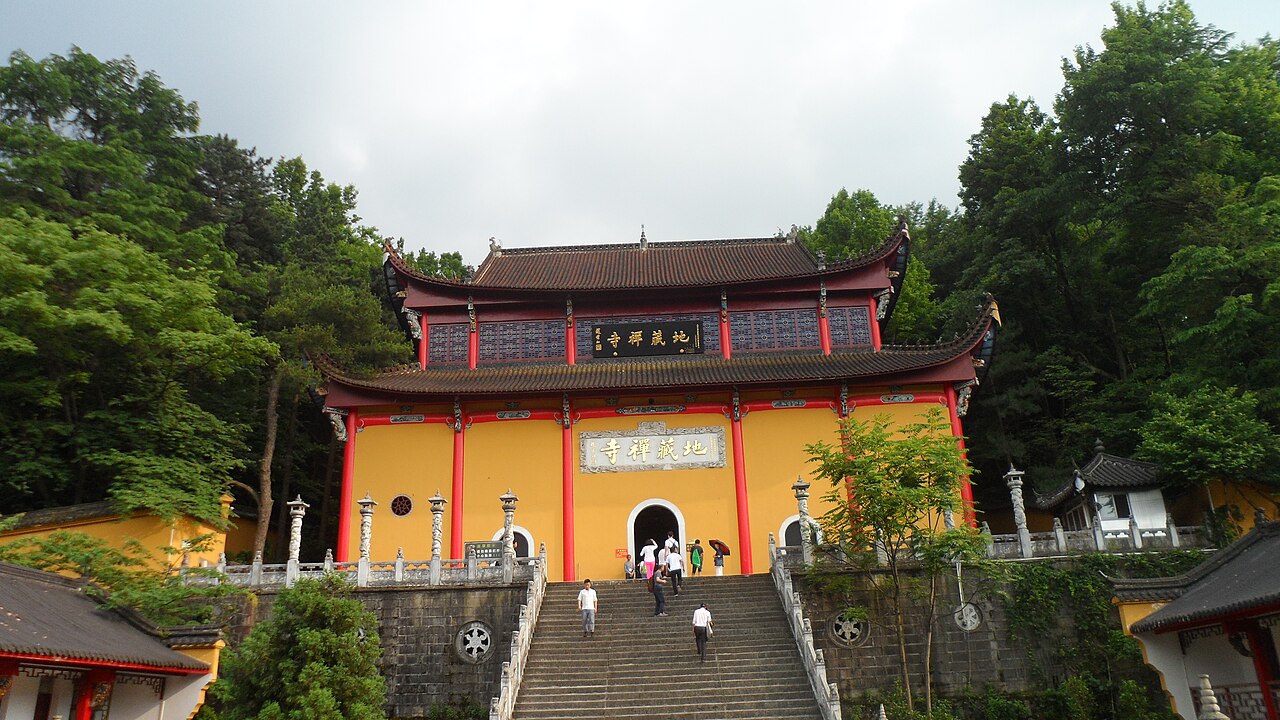
The holiest site on Mount Jiuhua, Roushen Hall enshrines the mummified remains of Jin Dizang, the Silla monk believed to be the manifestation of Ksitigarbha. Approach via 99 stone steps and photograph from the base looking up — the low-angle shot with the hall’s tiered roof above creates a powerful image of devotion. Visit at dusk when crowds thin and the lantern-lit corridor wrapping the pagoda glows warmly.
Tiantai Peak Summit
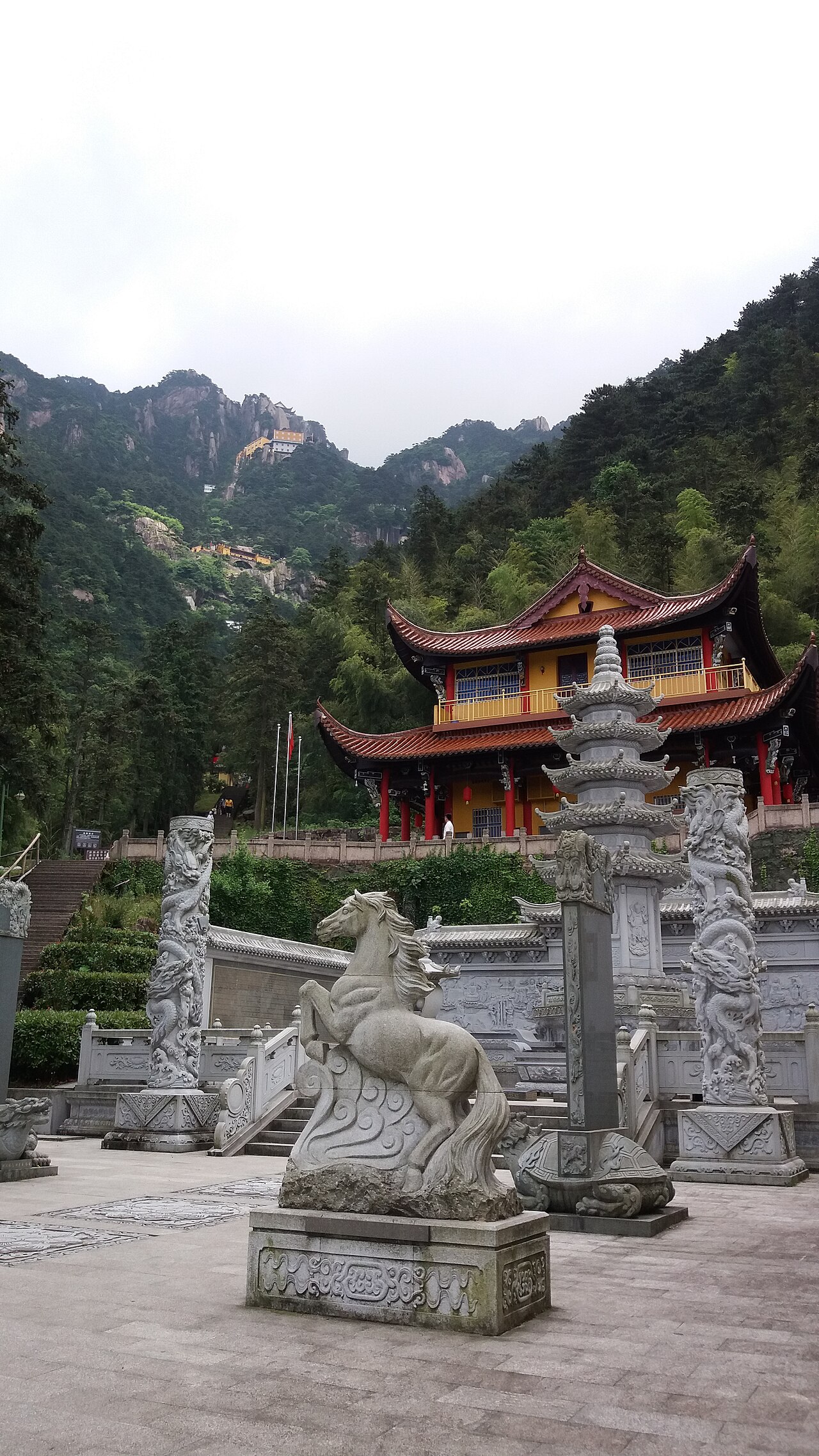
As the highest point of Mount Jiuhua, Tiantai Peak rewards the cable car ride with 360-degree views of layered ridges, cliff-perched temples, and on lucky mornings a dramatic sea of clouds. The cliffside walkway leading to Tiantai Temple is built into the rock face, and when mist rolls through, it feels like walking through a fairyland. Take the first cable car at 7:30 AM to beat August queues that routinely exceed one hour.
Baisui Palace Cliffside View
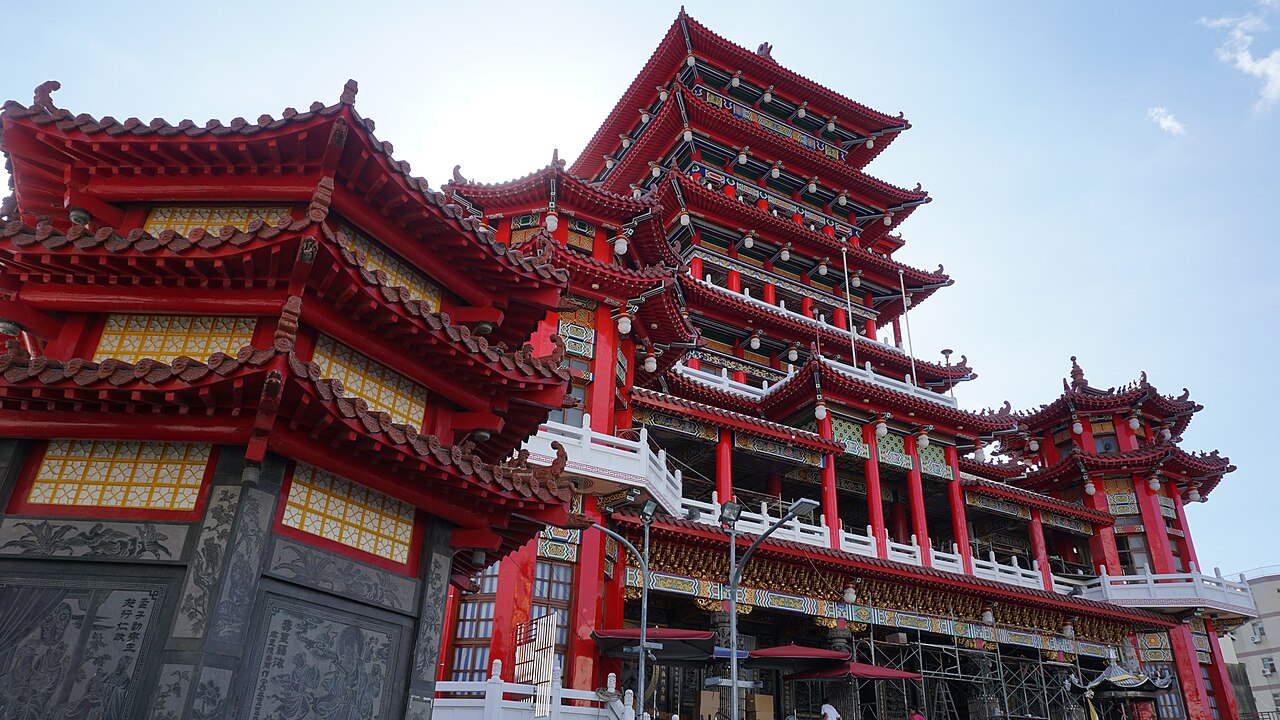
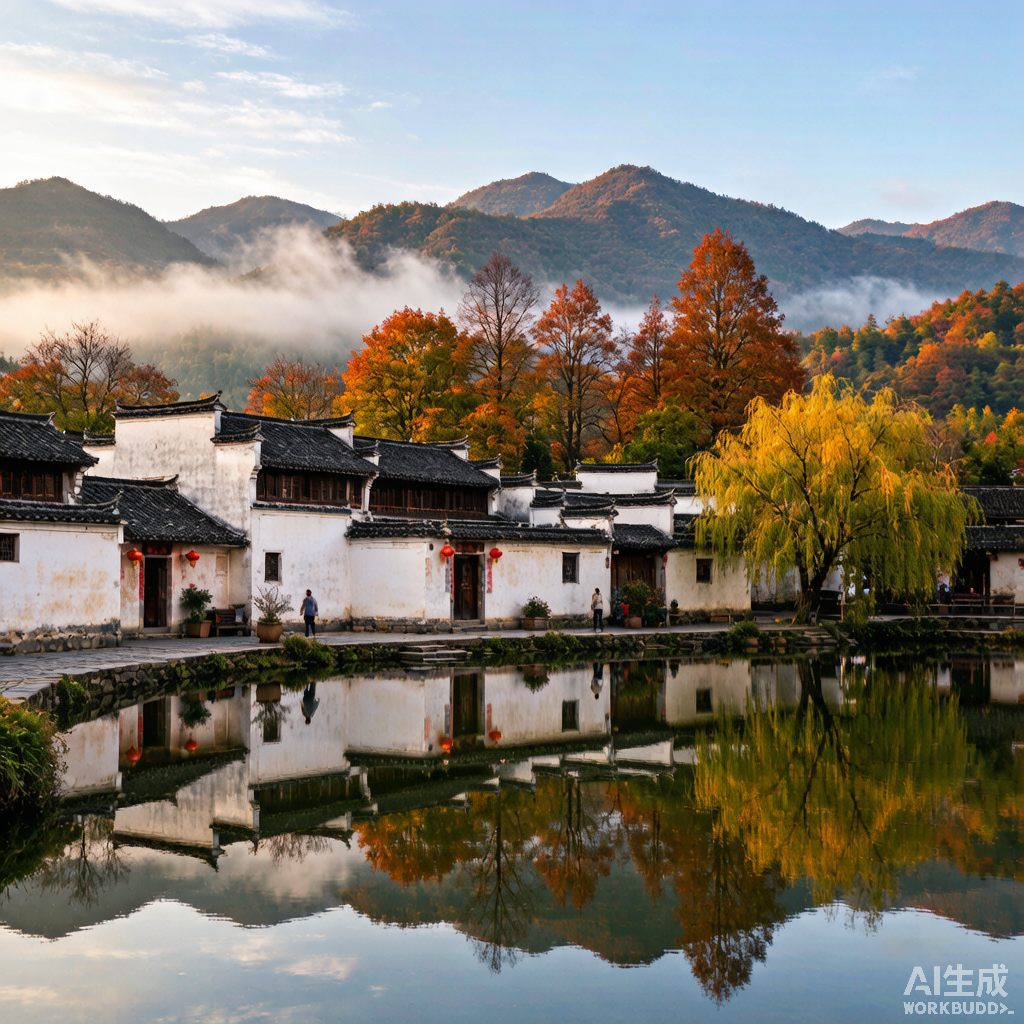
Perched on a steep cliff, Baisui Palace houses the mummified body of Ming Dynasty Zen Master Wuxia and offers the best panorama of Jiuhua Street’s white-walled, black-tiled rooftops below. The viewing platform in front of the temple is the go-to spot for sunset shots around 4 to 5 PM, when the late light rakes across the Hui-style architecture and distant peaks. A gentle cable car ride makes this accessible even for casual walkers.
Huatai Scenic Area Cliffside Walkway
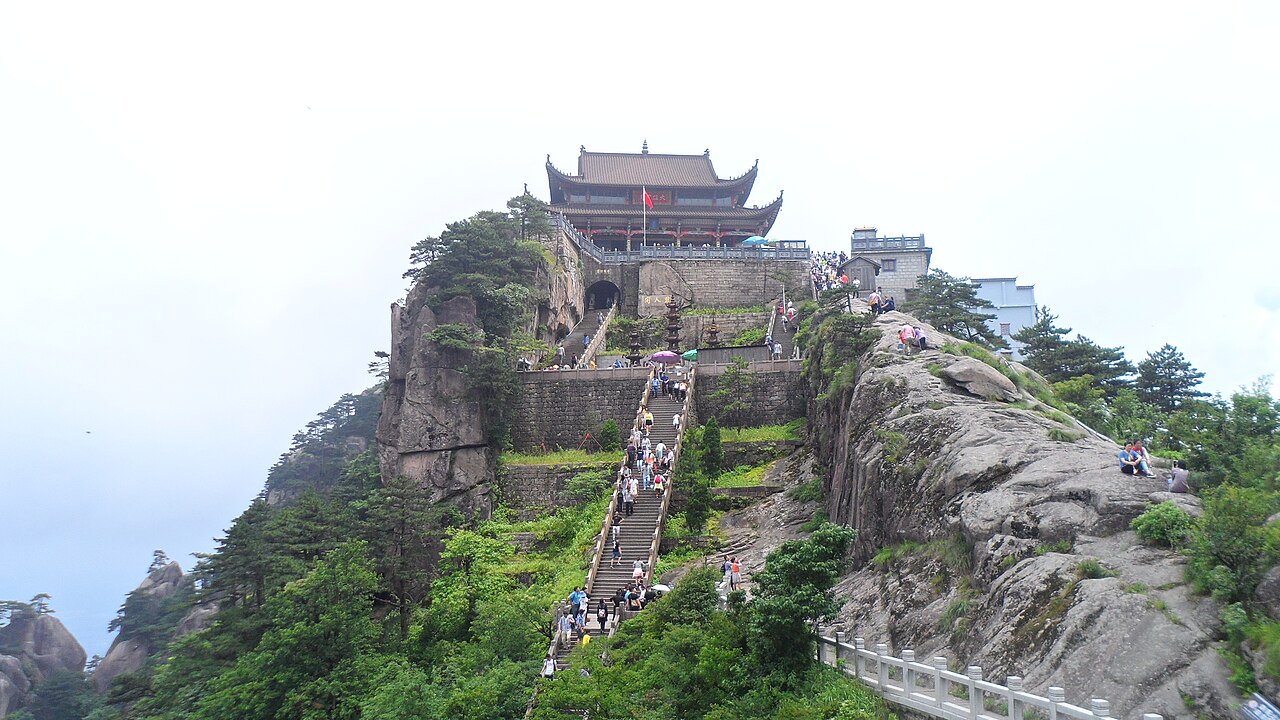
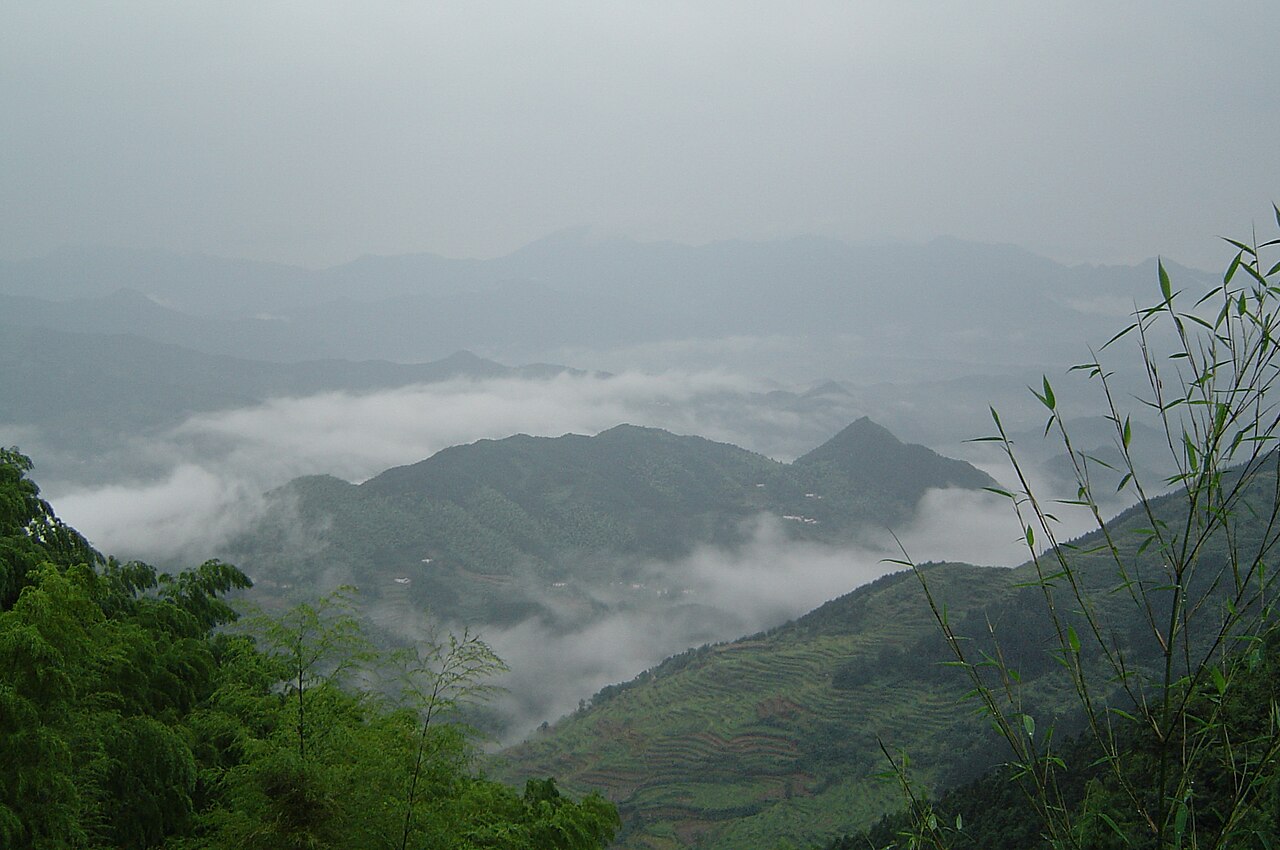
Less crowded than the main temple circuit, Huatai features a cliff-hugging plank walkway threading through bizarre rock formations and dense forest. After summer rain, early-morning visitors have a high chance of photographing a cloud sea rolling through the peaks. The trail is mostly flat with no intense climbing, making it the most comfortable scenic walk on the mountain.
Huacheng Temple Release Pond
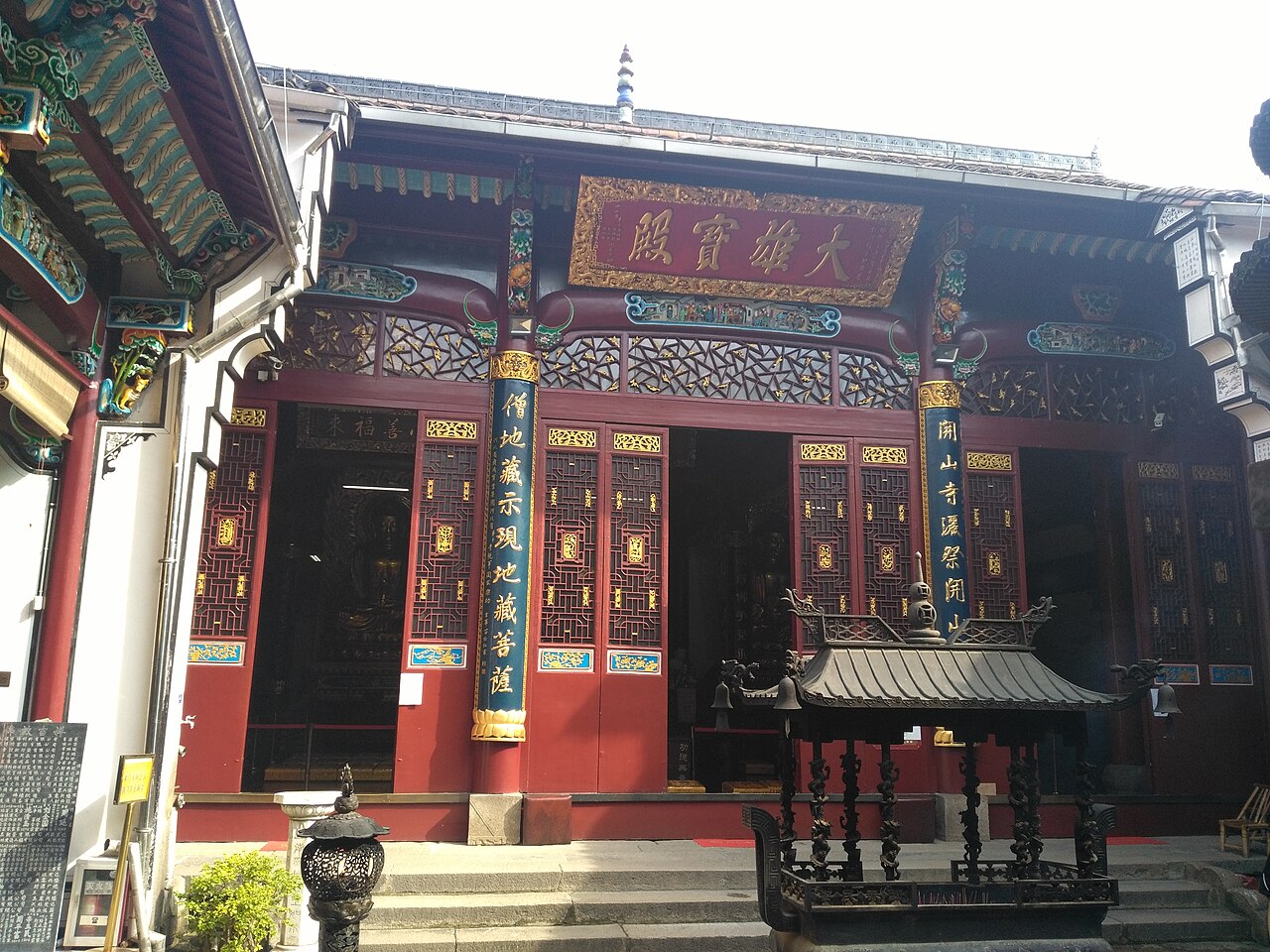
As the founding temple of Mount Jiuhua, Huacheng Temple centers on a serene release pond fringed by ancient trees. The pond’s still surface creates a mirror reflection of the temple buildings, sky, and old trees — a favorite quiet-photography spot for Xiaohongshu users. The reflection is calmest right after rain or in the early morning before the wind picks up.
Book the Tiantai cable car ticket online the night before and ride the first car at 7:30 AM. August afternoons bring sudden thunderstorms, so carry a lightweight raincoat instead of an umbrella, as mountain gusts will snap umbrella ribs.
Getting there
- High-speed rail to Chizhou station, then bus or taxi to the mountain (~40 km, 1 hr)
- Direct buses from Huangshan, Tunxi and Hefei
- Highest peak
- 1,342 m (Shiwang Peak)
- Sacred status
- One of China's four Buddhist mountains, seat of Dizang
- Temples
- 90+ on the mountain