
Why go
The pagoda was commissioned by the Khitan Liao dynasty emperor to house a relic of the Buddha. It rises 67.13 metres in five visible storeys, but internally contains nine storeys thanks to mezzanine levels hidden inside the structure.
Its survival is an engineering marvel. The pagoda has withstood seven major earthquakes and, in 1926, was hit by more than 200 artillery shells during a warlord battle — two posts were broken but the building stood. The secret lies in the 54 different kinds of bracket sets that flex under stress and redistribute the load across its 65-metre span.
- The 67-metre octagonal timber pagoda — the tallest wooden building on earth before modernity
- A 11-metre gilded Sakyamuni statue on the ground floor
- The 54 kinds of bracket sets (dougong) used in the structure
- Buddhist murals and calligraphy from the Liao dynasty inside
What to see
Stand in the courtyard and look up — the pagoda appears to tower impossibly over the flat town. Walk around the base to study the massive columns and bracket sets, then enter the ground floor to see the 11-metre gilded Sakyamuni statue framed by a richly decorated ceiling.
The murals on the ground floor walls — guardians, Buddhas and donors — are Liao originals, a rare survival of Khitan painting. Look for the calligraphic plaques hung through the upper storeys, gifts of Ming emperors.
Climbing is now restricted to the first or sometimes second floor for preservation. The courtyard around the pagoda holds two smaller modern halls and a bell tower.
Practical notes
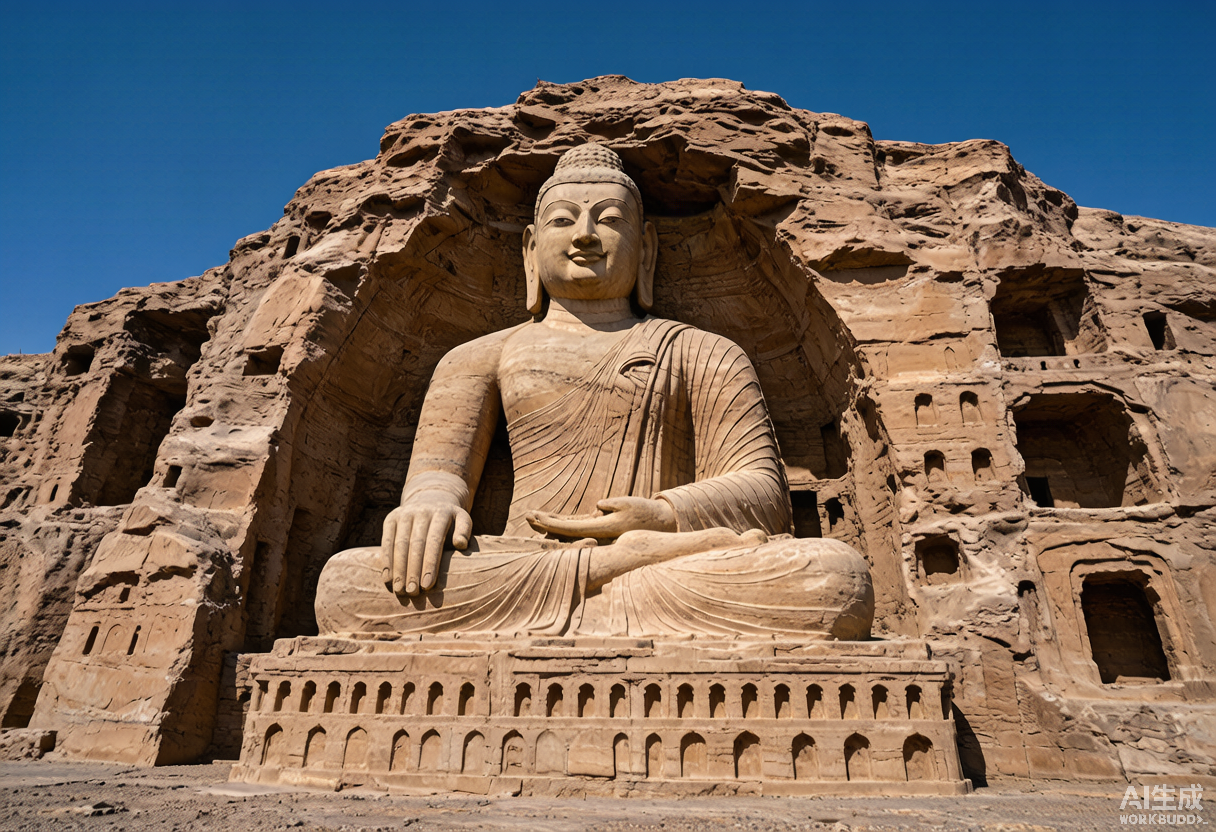
Combine Yingxian with the Hanging Temple and Yungang Grottoes for a two-day circuit of Datong's heritage — all can be reached by car. Avoid the midday tour-bus crush by arriving before 9 a.m.
Getting there
- Bus from Datong to Yingxian (90 min), then short taxi
- Drive from Datong (1.5 hours) — easiest as part of a Datong trip
- Built
- 1056 CE (Liao dynasty)
- Height
- 67.13 metres — tallest wooden pagoda on earth
- Brackets
- 54 types of dougong