
Why go
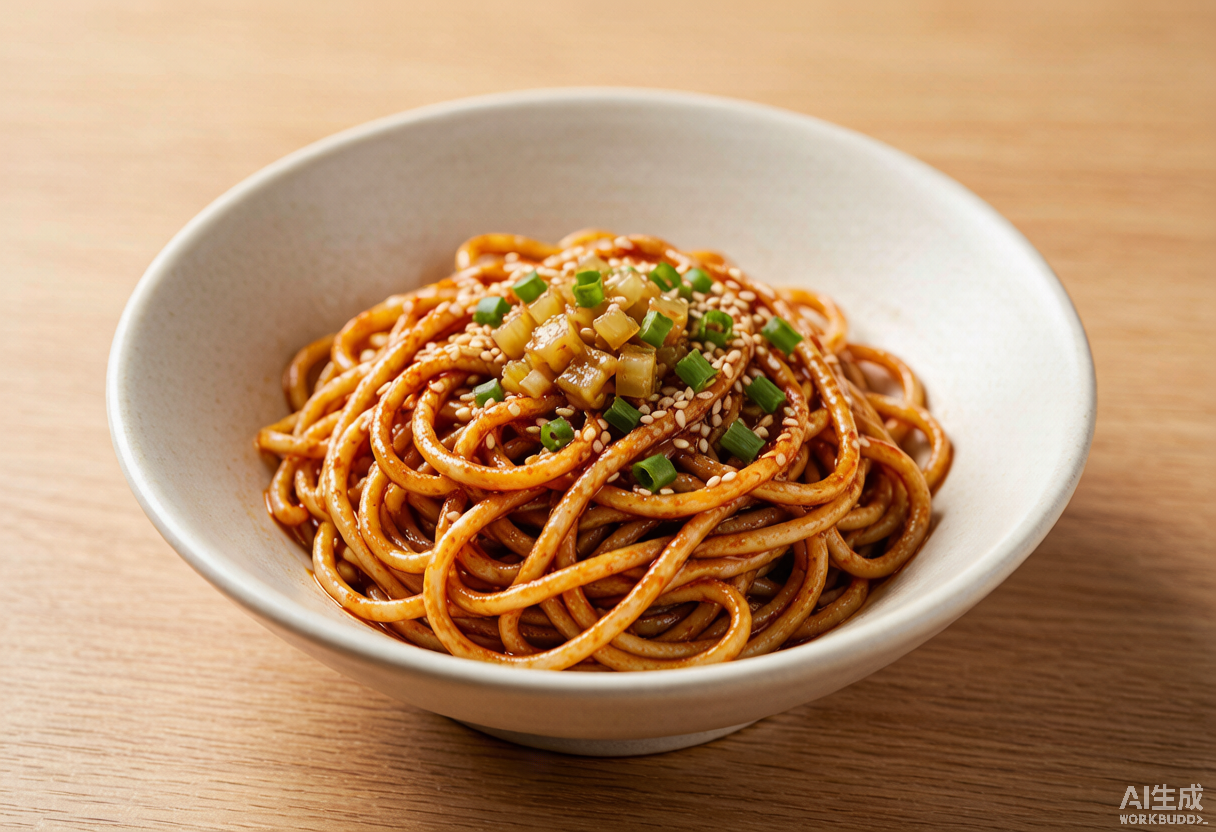
Hot dry noodles start as pre-cooked alkaline noodles, flash-blanched in boiling water for seconds, then shaken dry and drenched in sesame paste, soy sauce, chilli oil and a spoonful of pickled string beans and diced radish. The result is dense, savoury and aromatic — noodles that grab the sauce rather than swim in it. There is no broth; 'dry' is the whole point.
Wuhan treats breakfast as a competitive sport. Locals perch on plastic stools, bowl in one hand and chopsticks in the other, demolishing a bowl in five minutes flat before commuting onward. Join them: the best bowl is never in the restaurant, it is at the busiest corner stall with the shortest noodles-to-mouth distance.
- Guozao culture: breakfast is eaten standing or walking, often from a plastic stool by the roadside
- The sauce is nutty sesame paste, not peanut butter — order it 'ban jun' (拌匀) so it's tossed properly
- ¥6–10 a bowl; the classic add-ons are a fried egg or a cup of egg-drop wine (蛋酒)
- Cai Lin Ji (蔡林记), founded 1929, is the old-house name for the sesame-paste original
How to eat it
Toss the noodles immediately — the sesame paste seizes and clumps if the bowl sits. Mix from the bottom up until every strand is coated, then eat fast while the texture is still springy. The pickled beans and radish are not garnish; their crunch and acidity are structural. If the paste tastes too thick, a splash of the stall's vinegar loosens it. A sweet cup of egg-drop rice wine alongside is the traditional counterpoint.
Where to try it
Cai Lin Ji (蔡林记) is the century-old standard-bearer, with branches across the city serving the classic black-sesame version. But many locals argue the best bowls come from nameless corner shops in the old Hankou lanes around Jianghan Road. For the full guozao experience, hit a street like Grain Street (粮道街) in Wuchang around 7am, where a dozen breakfast vendors — noodles, doupi, steamed buns, fried dumplings — share a few hundred metres.
Getting there
- Metro Line 2 to Jianghan Road or Zhongshan Park for dense breakfast-stall territory
- Cai Lin Ji has branches across the city, including Hankou's Zhongshan Avenue
- Origin
- Wuhan, Hubei — circa 1930s street stalls
- Price
- ¥6–10 a bowl
- Key ingredients
- Alkaline noodles, sesame paste, soy, pickled string beans