
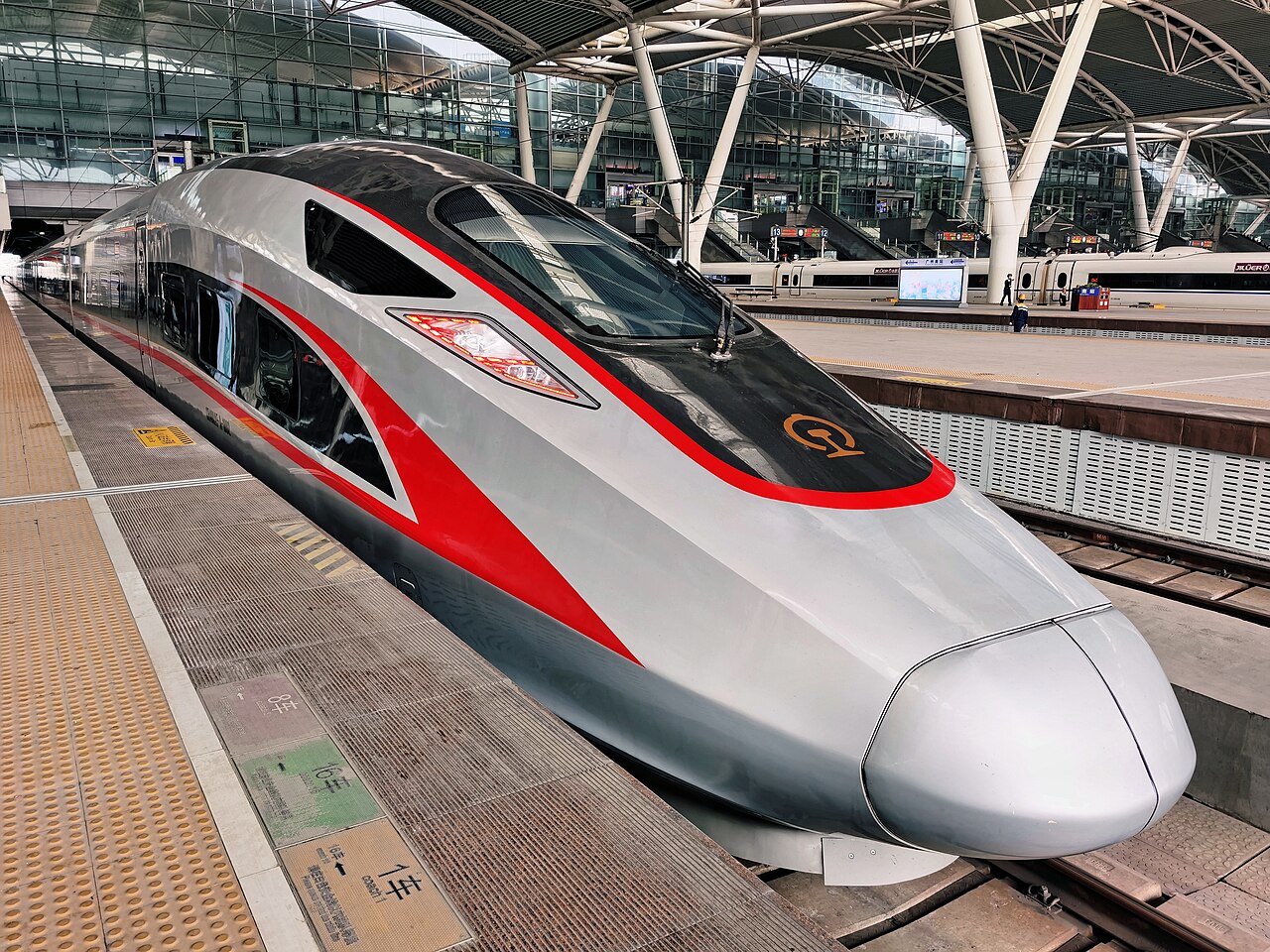
CR400AF / CR400BF — Fuxing
Speed: Up to 350 km/hChina's flagship. Fuxing trains run the fastest services (Beijing–Shanghai in 4.5 hours) and have the widest seats, full WiFi and touchless restrooms. G trains on main lines are overwhelmingly Fuxing.

TRAINS · 高铁
Everything about China's high-speed rail — the fleet, G vs D, seat classes, the Shanghai Maglev, and a live 12306 timetable lookup.
Updated 2026-08
Two families dominate the network: the Fuxing (复兴号, lit. “rejuvenation”) series — China's newest trains running at up to 350 km/h — and the older Hexie (和谐号, “harmony”) series still doing the bulk of daily work. All are streamlined, all-electric and immaculately maintained. You can tell the generation apart at a glance: Fuxing trains have a smooth, shark-nosed cab and a red or gold stripe; Hexie trains have a longer, pointier nose and a white-blue livery.
China's flagship. Fuxing trains run the fastest services (Beijing–Shanghai in 4.5 hours) and have the widest seats, full WiFi and touchless restrooms. G trains on main lines are overwhelmingly Fuxing.
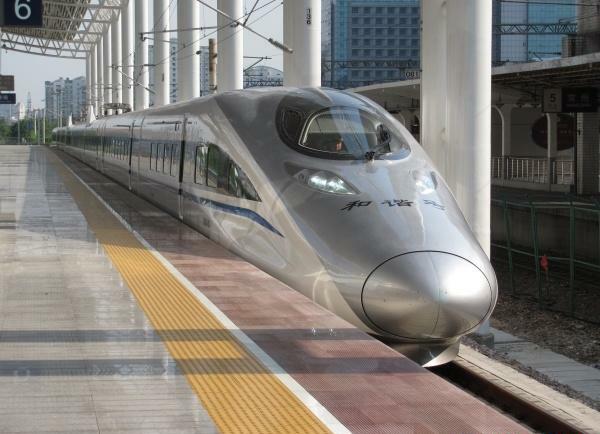
The classic long-nosed workhorse, built by CSR (now CRRC) from 2010. It held the world speed record of 486.1 km/h in a 2010 test. Still common on G services at 300 km/h.
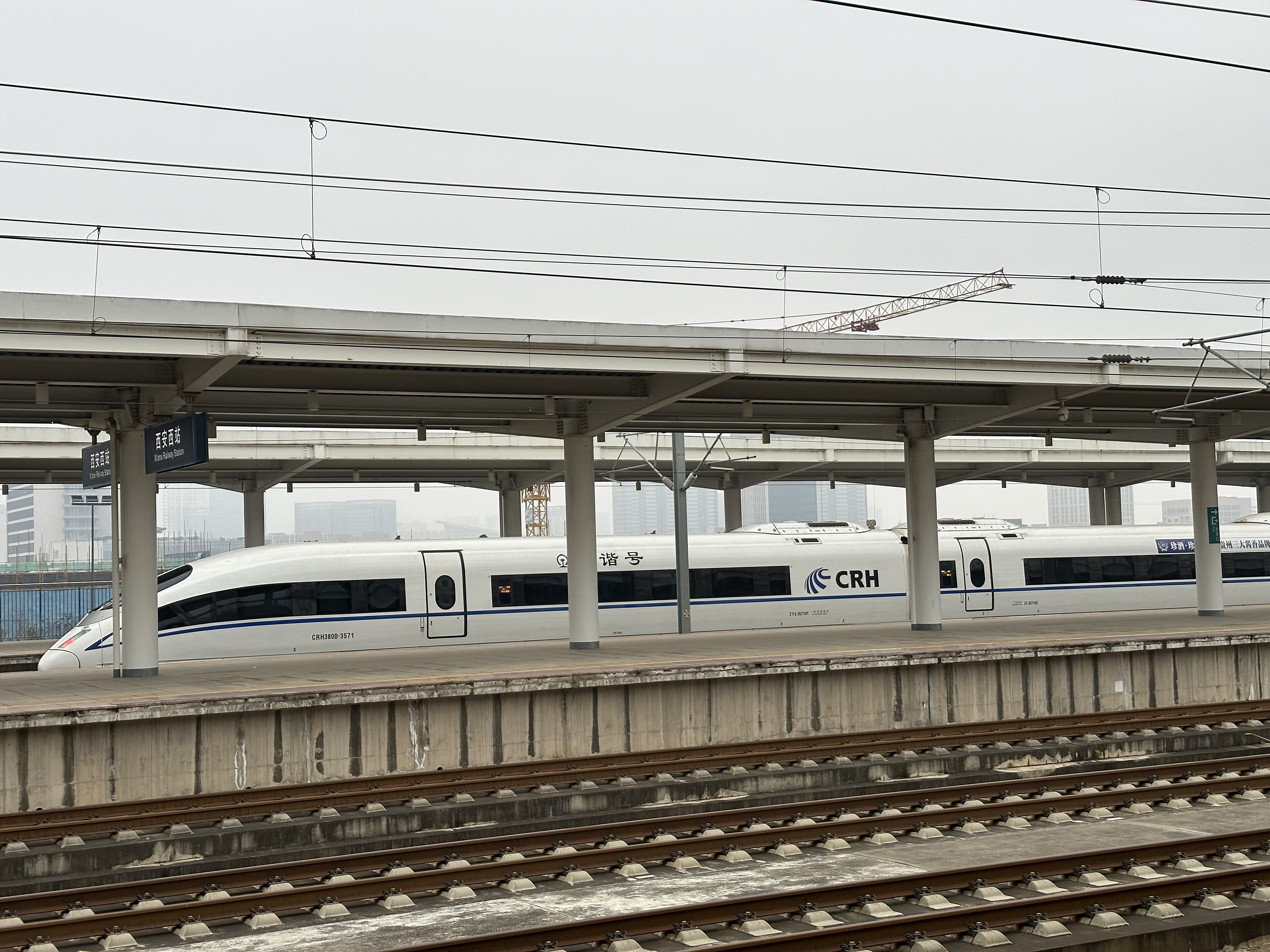
A Siemens Velaro-derived design from Bombardier/CNR (now CRRC), with a distinctive silver-blue nose. Also runs 300 km/h G services across the network.
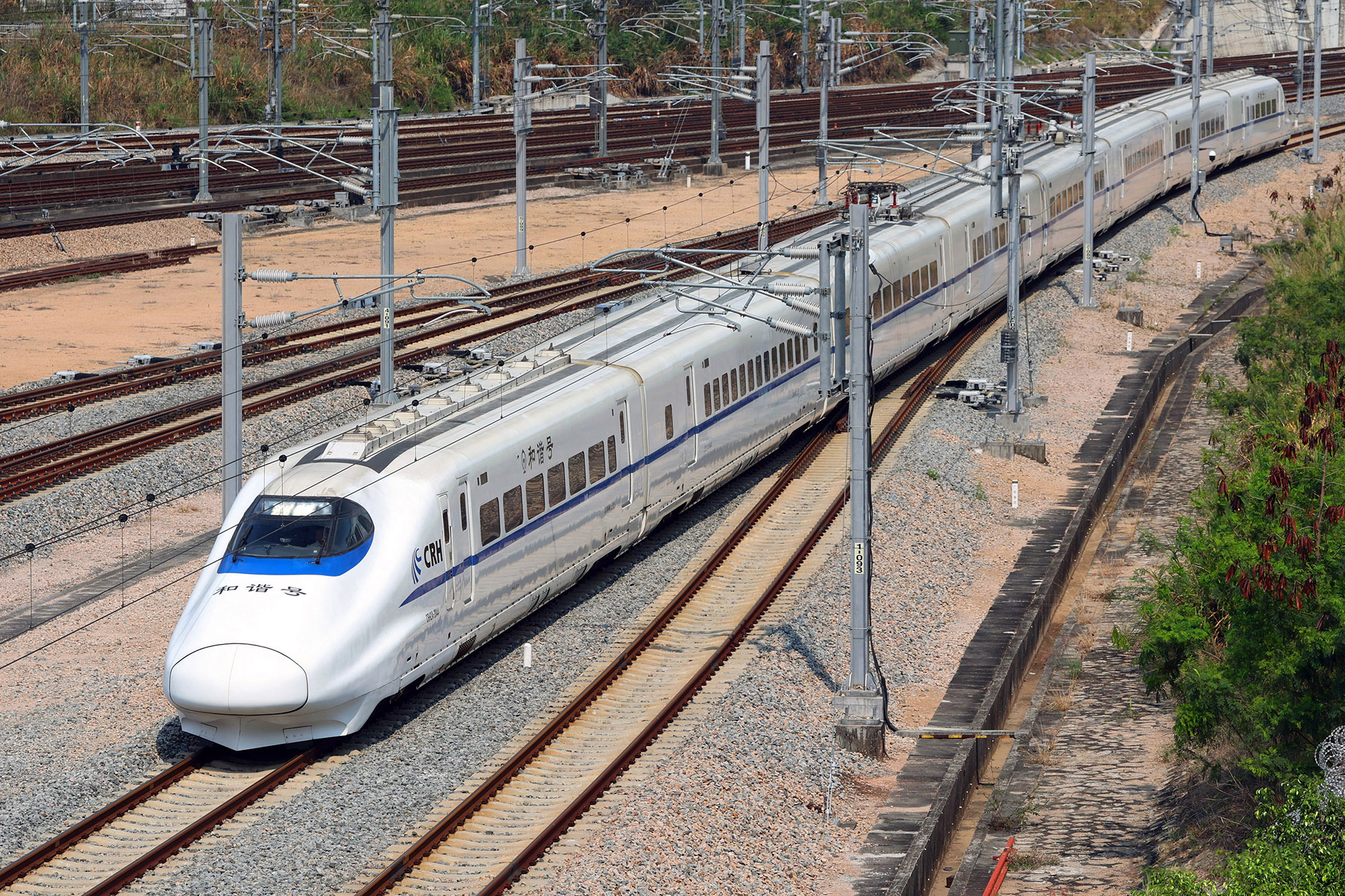
A Kawasaki-derived design from Sifang, originally built for 250 km/h. It is the typical D-train — comfortable, cheaper, and able to run on upgraded conventional lines that pure high-speed trains cannot.
Every Chinese bullet train's number starts with a letter that tells you its speed class. G (高速动车组, “high-speed EMU”) is what travellers usually call “gao tie” — the fastest class. D (动车组, “EMU”) is the slower, cheaper sibling. C trains are short intercity shuttles. The letter is a guide, not a guarantee: a non-stop D can beat a stop-heavy G on the same route, so always compare total time and fare on 12306.
| G — High-speed EMU | D — EMU | |
|---|---|---|
| Top speed | 300–350 km/h | 200–250 km/h |
| Typical second-class fare | ≈ ¥0.46–0.48 per km | ≈ ¥0.31 per km |
| Lines used | High-speed dedicated lines only | HSR lines plus upgraded conventional lines |
| Seat classes | Business, first, second (and more) | Usually first and second class only |
| Typical trains | CR400 Fuxing, CRH380 series | CRH1, CRH2 (not 2C), CRH5 |
| Priority on the line | Highest — D trains give way | Lower than G |
On lines capped at 200 km/h, G and D second-class fares are the same. The practical rule: compare total time, number of stops and fare on 12306 — the letter alone does not tell you which is better for your trip.
G trains offer up to four ways to sit: business class (a lie-flat pod on flagship routes), first class (wide and quiet), second class (comfortable standard), and standing tickets sold when seats are sold out. D trains usually offer only first and second class. Prices below are typical one-way fares on the Beijing–Shanghai line (2026).
| Class | Photo | Layout | Seat width | Recline | Typical fare (Beijing–Shanghai) | Best for |
|---|---|---|---|---|---|---|
| Business class | 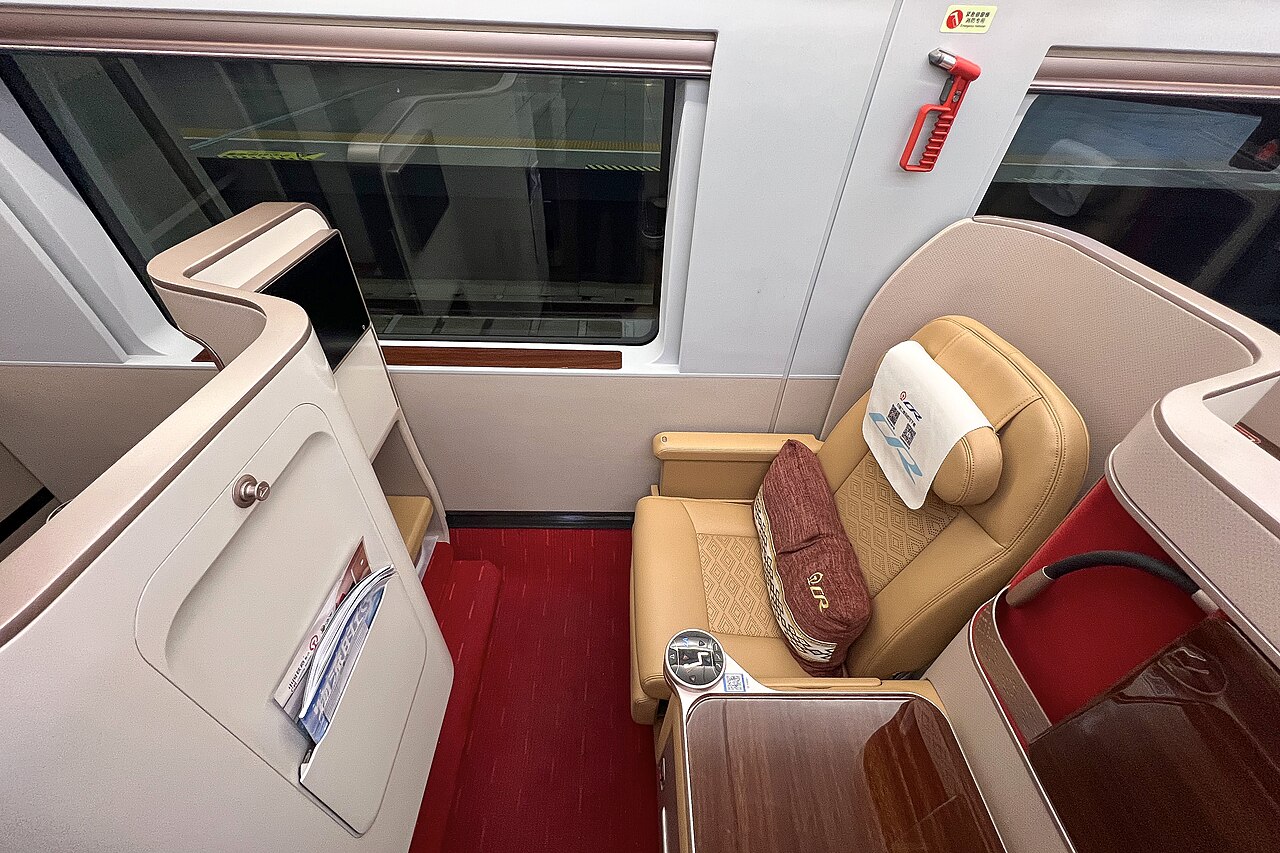 |
2+1 per row | ≈ 55 cm | Lie-flat (180°) | ≈ ¥1,748 | Lie-flat comfort on long flagship routes |
| First class | 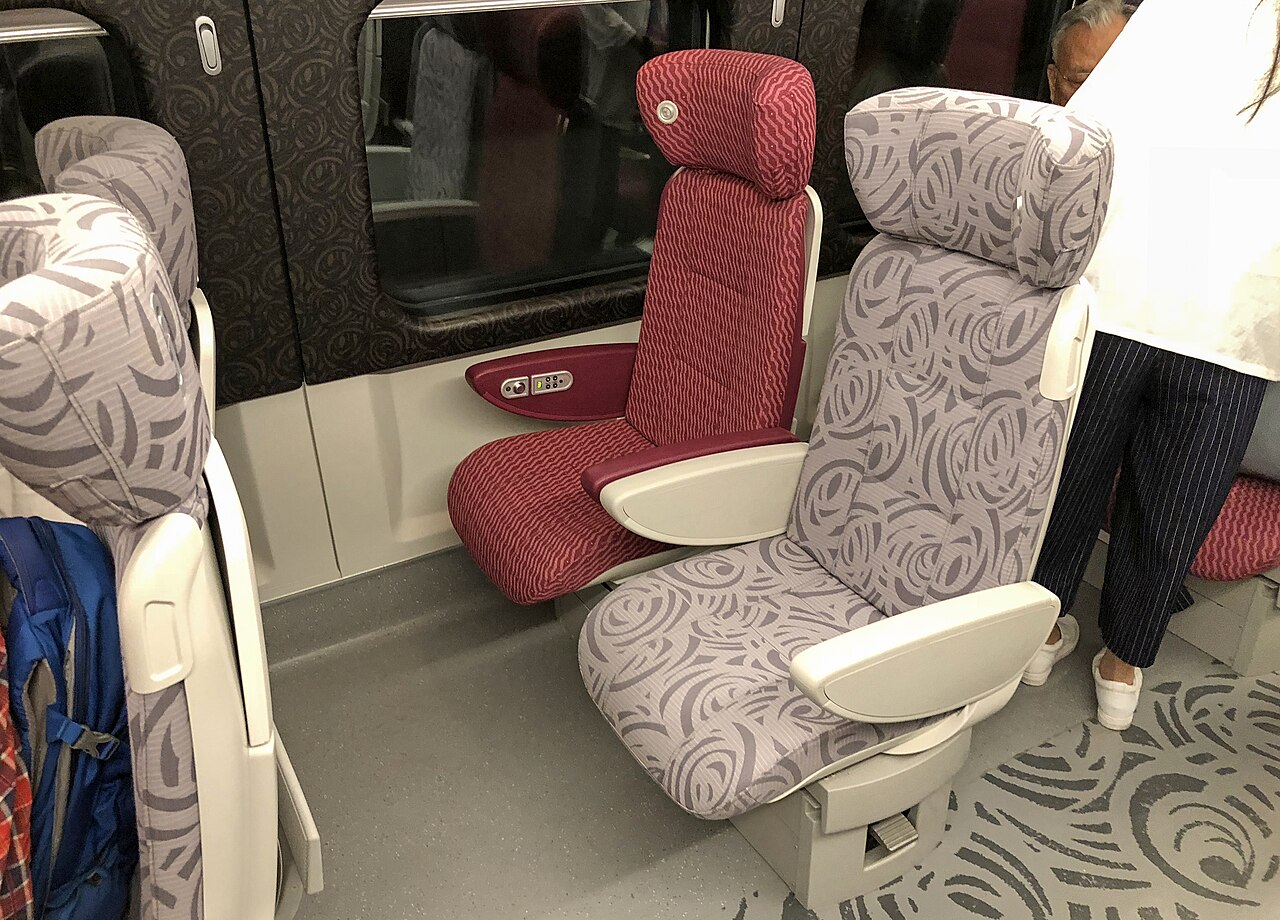 |
2+2 per row | ≈ 48–50 cm | ≈ 30° recline | ≈ ¥933 | Worth the upgrade on 3+ hour trips |
| Second class | 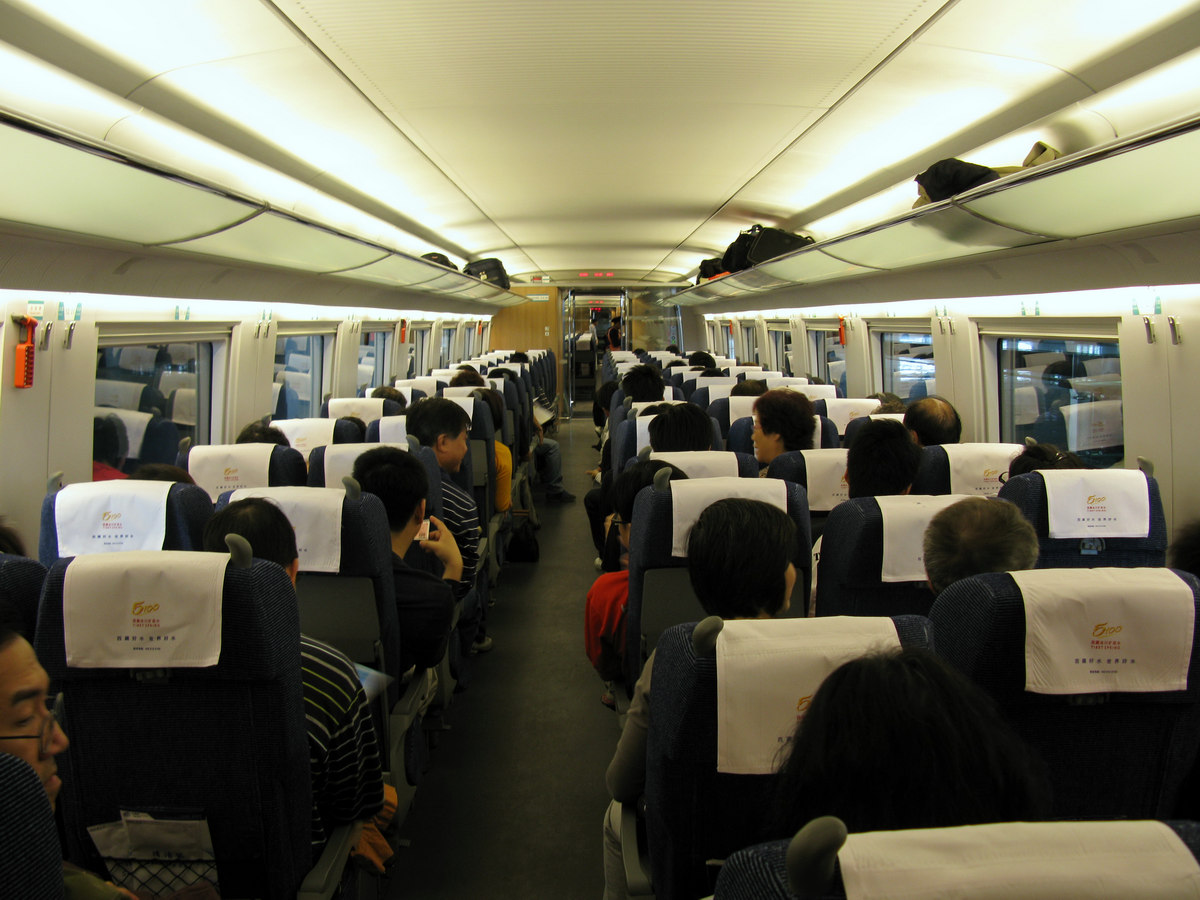 |
3+2 per row | ≈ 43 cm | ≈ 20° recline | ¥526–673 | Great value for most journeys |
| Standing (no seat) | If you spot an empty seat, you may sit there for a while until the ticket holder arrives. You can also bring a small folding stool and set it up in a vacant aisle spot. | Aisles and vestibules | — | — | Same as second class | Short hops only; avoid on 3+ hour rides |
Fares are typical one-way prices on the Beijing–Shanghai route (2026). Standing tickets cost the same as second class and are sold only when seated tickets are gone.
During holidays or peak days, 12306 may sell standing tickets for sold-out trains. They cost exactly the same as second class and let you board any carriage, but you have no seat — expect to stand in the aisle or vestibule, or sit on the floor near the doors. For rides under an hour it is fine; for long journeys, keep checking 12306 for a later train with seats, or pay the small fee to change your ticket.
The world's only commercial high-speed maglev line — and still the fastest train you can buy a ticket for anywhere. It shuttles between Pudong Airport and Longyang Road station in 7–8 minutes, floating on a magnetic field with no wheels at all. Riding it is a tourist attraction in its own right.
| Standard one-way | ¥50 | |
| With same-day boarding pass | ¥40 | Show your same-day flight ticket at the counter |
| Round-trip | ¥80 | Valid 7 days |
| VIP one-way / round-trip | ¥100 / ¥160 | Front cabin with panoramic views |
Pick your departure station, arrival station and date — the timetable below loads directly from 12306.cn, the official China Railway booking site, so every train, time and fare is exactly as the railway publishes it. The embedded window is the official 12306 page; if it does not render on your device, use the “Open on 12306” button.